A new garage door is one of the biggest moving systems in your home. It protects your vehicles, improves security, and adds value to your property. Yet many homeowners only think about the warranty after something goes wrong.
Imagine replacing a garage door opener only to discover the repair is not covered because the warranty registration was never completed. Or paying for a broken spring because it is considered a wear-and-tear component instead of a manufacturing defect. These situations happen more often than most homeowners realize.
A garage door warranty can save hundreds or even thousands of dollars, but only when you understand what it actually covers. Every manufacturer has different warranty terms, coverage periods, and claim requirements. Some warranties protect only specific components, while others include replacement parts but exclude labor costs.
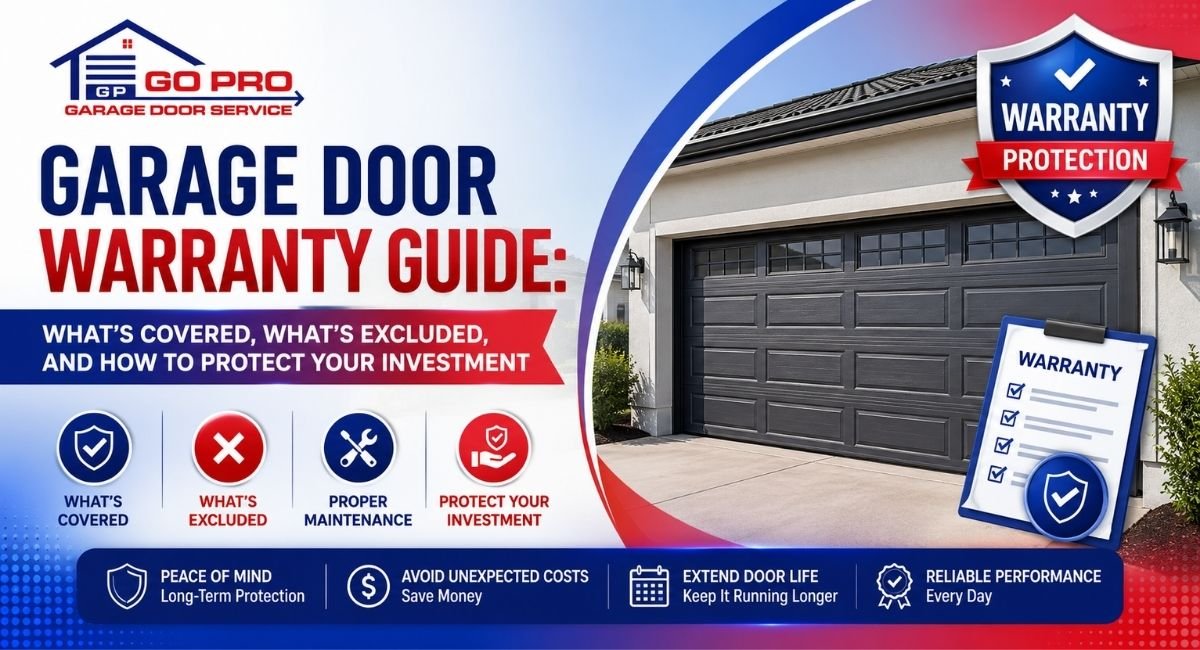
This garage door warranty guide explains how garage door warranties work, what is typically covered, what is usually excluded, and how you can protect your investment for years to come.
Why Garage Door Warranties Matter
Many homeowners assume a warranty covers every repair during the warranty period. That is rarely the case.
A warranty is a written promise from the manufacturer or installer stating they will repair or replace eligible components if they fail because of defects in materials or workmanship.
Without a warranty, even a relatively small repair can become expensive. Garage door systems include many moving parts that work together every day. Springs, rollers, cables, tracks, hinges, panels, weather seals, and electronic openers all experience regular use.
Although quality garage doors are built for durability, defects can still occur. A warranty helps reduce financial risk when those defects appear.
For homeowners in Florida, warranties are even more important. High humidity, salt air near coastal areas, intense heat, and frequent storms place additional stress on garage doors and openers.
Understanding the Different Types of Garage Door Warranties
Not every warranty protects the same parts of your garage door.
Knowing the different types helps you understand who is responsible for repairs.
Manufacturer Warranty
A manufacturer warranty covers defects that occur because of problems during manufacturing.
Examples include:
- Warped door panels caused by manufacturing flaws
- Paint or finish failures covered under warranty terms
- Faulty insulation materials
- Defective hardware
- Electronics that fail because of factory defects
Manufacturers such as LiftMaster, Clopay, Genie, and Amarr each publish detailed warranty policies for their products.
These warranties generally cover replacement parts but often do not include installation labor.
Labor Warranty
A labor warranty is different.
Instead of covering defective products, it covers the workmanship performed by the installation company.
For example:
- Incorrect spring installation
- Poor track alignment
- Improper opener installation
- Loose mounting brackets
- Installation mistakes causing operational issues
Many installation companies provide labor warranties ranging from one year to several years depending on the service provided.
Always ask whether labor coverage is separate from the manufacturer’s warranty.
Extended Warranty
Some companies offer optional extended warranties.
These plans may include:
- Longer labor coverage
- Additional replacement parts
- Annual inspections
- Priority repair scheduling
An extended warranty may be worthwhile for premium garage doors or smart opener systems.
What Does a Garage Door Warranty Usually Cover?
Although every company is different, most warranties include protection against manufacturing defects.
Common covered items include:
| Component | Common Warranty Coverage |
| Door sections | Material defects |
| Steel panels | Rust-through protection under specific conditions |
| Windows | Factory defects |
| Decorative hardware | Manufacturing defects |
| Garage door opener motor | Limited warranty depending on manufacturer |
| Circuit boards | Factory defects |
| Belt or chain drive | Limited coverage |
| Insulation | Material failure |
Coverage generally applies only when the failure results from defective manufacturing rather than misuse or normal aging.
Components That Often Have Different Warranty Periods
One garage door system may actually have several different warranties.
For example:
| Component | Typical Coverage Period |
| Door panels | Lifetime or limited lifetime |
| Paint finish | 5 to 15 years |
| Garage door opener motor | 5 years to lifetime |
| Electronics | 1 to 5 years |
| Accessories | 1 year |
| Springs | 1 to 10 years depending on cycle rating |
| Labor | 1 to 3 years |
Always verify the exact coverage period in your warranty documentation.
What Is Usually Not Covered?
This is where many homeowners become frustrated.
Most warranty exclusions are clearly listed, but few people read them until filing a claim.
Common warranty exclusions include:
Normal Wear and Tear
Garage doors move thousands of times every year.
Parts naturally wear out, including:
- Springs
- Rollers
- Bearings
- Hinges
- Cables
- Weather stripping
These are considered maintenance items rather than manufacturing defects.
Lack of Maintenance
Many warranties require routine maintenance.
Ignoring lubrication, inspections, or adjustments can void warranty protection.
Simple preventive care can significantly extend the life of your garage door.
Following a regular garage door maintenance checklist can help keep your system operating properly while supporting warranty compliance.
Improper Repairs
DIY repairs may save money initially, but they can also void your warranty.
Examples include:
- Installing non-approved parts
- Modifying springs
- Altering track systems
- Rewiring opener components
- Adjusting torsion springs without proper procedures
Professional service records often help support future warranty claims.
Storm Damage
Florida homeowners should pay special attention here.
Most manufacturer warranties do not cover damage caused by:
- Hurricanes
- Flooding
- Lightning
- Flying debris
- High winds
- Falling trees
These situations are usually handled through homeowners insurance rather than the manufacturer’s warranty.
Accidental Damage
Damage caused by vehicles or other accidents is generally excluded.
Examples include:
- Backing into the garage door
- Impact from sports equipment
- Forklift damage
- Construction accidents
Rust Caused by Environment
Many homeowners misunderstand rust warranties.
A warranty may cover rust caused by defective coating but not corrosion caused by:
- Salt air
- Coastal environments
- Chemical exposure
- Fertilizers
- Improper cleaning products
Florida’s humid climate makes regular cleaning especially important.
Why Warranty Registration Is So Important
Many manufacturers require warranty registration shortly after installation.
Without registration:
- Coverage may be reduced.
- Claims may take longer.
- Some lifetime warranties become limited warranties.
- Ownership records become difficult to verify.
Registration usually requires:
- Purchase date
- Model number
- Serial number
- Installer information
- Homeowner contact information
Keeping digital copies of your receipt makes future claims much easier.
How to File Garage Door Warranty Claims Successfully
Submitting garage door warranty claims is usually straightforward when you have the necessary documentation.
Start by identifying whether the issue relates to product defects or installation workmanship.
If the problem involves defective materials, contact the manufacturer or the dealer who supplied the product.
If the issue appears related to installation quality, contact the installer first because the labor warranty may apply.
Most manufacturers request:
- Original purchase receipt
- Product serial number
- Warranty registration confirmation
- Photos of the damaged component
- Description of the problem
- Installation date
Providing complete information often speeds up the approval process.
When a Warranty Covers the Repair
A homeowner installs a new insulated steel garage door.
After eighteen months, one panel begins separating because the internal bonding process failed during manufacturing.
Inspection confirms there was no accidental damage, poor maintenance, or misuse.
Because the issue resulted from a manufacturing defect, the manufacturer warranty covers the replacement panel.
However, depending on the warranty terms, the homeowner may still pay labor charges if the installer’s labor warranty has already expired.
When the Warranty Does Not Apply
Another homeowner notices the garage door opener struggling to lift the door.
Instead of scheduling service, they continue using it for several months.
Eventually, a broken torsion spring places excessive strain on the opener motor, causing additional damage.
Inspection reveals the spring failed because of normal wear rather than a manufacturing defect.
In this case, neither the spring nor the damaged opener may qualify for warranty coverage because the failure resulted from regular use and delayed maintenance.
If you notice unusual noises, slow movement, or uneven operation, addressing them early can prevent larger repairs. Knowing the common garage door repair signs helps homeowners identify problems before they become more expensive.
Major Garage Door Brands and Their Warranty Approaches
Leading manufacturers have different warranty structures, but they generally follow similar principles.
LiftMaster
LiftMaster garage door openers often provide different warranty periods for motors, belts, chains, accessories, and electronic components. Premium models typically receive longer motor coverage than entry-level units.
Clopay
Clopay offers varying warranties depending on the door collection. Steel doors, composite doors, insulation, paint systems, and decorative finishes may each have separate coverage periods.
Genie
Genie opener warranties usually separate motor coverage from accessories, remote controls, batteries, and smart home components.
Amarr
Amarr garage doors often include lifetime limited warranties on selected residential door sections while maintaining separate coverage for hardware and finish systems.
Regardless of brand, reading the complete warranty document is essential because the details vary by product line and model.
How Regular Maintenance Helps Protect Your Warranty
Many homeowners focus on the length of the warranty but overlook one important requirement. Most manufacturers expect the garage door system to receive routine maintenance. Neglecting basic care can lead to avoidable failures and may affect warranty coverage.
A garage door opens and closes several times a day. Over time, moving parts collect dirt, lose lubrication, and gradually wear down. Small issues can turn into major repairs if they are ignored.
Simple maintenance tasks include:
- Lubricating rollers, hinges, and bearings with the correct garage door lubricant.
- Tightening loose nuts and bolts.
- Inspecting weather seals for cracks.
- Cleaning tracks to remove dirt and debris.
- Testing the garage door balance.
- Checking safety sensors for proper alignment.
- Listening for unusual noises during operation.
Lubrication is one of the easiest ways to reduce friction and extend the life of moving components. A homeowner who follows a regular garage door lubrication guide is less likely to experience premature wear that could lead to expensive repairs.
Professional inspections are also valuable. A trained technician can spot worn components before they fail and recommend preventive repairs that help keep your warranty intact.
Common Mistakes That Can Void a Garage Door Warranty
Many warranty claims are denied because the issue falls outside the terms of coverage. While every manufacturer has different conditions, several mistakes commonly lead to rejected claims.
Skipping Routine Maintenance
Ignoring routine service allows small issues to become major failures. If a damaged roller causes additional damage to the track or opener, the manufacturer may determine the problem resulted from neglect rather than a product defect.
Installing Non Approved Parts
Some homeowners replace broken components with inexpensive aftermarket parts.
Using springs, cables, rollers, or electronic accessories that are not approved for your garage door system may affect warranty coverage.
Whenever replacement parts are needed, confirm they meet the manufacturer’s specifications.
Attempting DIY Repairs
Garage doors are heavy systems with high-tension components. Torsion springs and lifting cables can be dangerous to handle without the right tools and experience.
Trying to repair these parts yourself may not only create safety risks but can also void the warranty if additional damage occurs.
Ignoring Early Warning Signs
A garage door rarely fails without warning. Slow movement, uneven lifting, loud grinding noises, or excessive vibration usually indicate that something needs attention.
Delaying repairs often allows the damage to spread to other components.
Failing to Keep Documentation
Warranty claims are much easier when you have complete records.
Keep copies of:
- Purchase invoices
- Installation receipts
- Warranty registration confirmation
- Maintenance records
- Service invoices
- Photos of the original installation
These documents can help verify that the product was properly installed and maintained.
Garage Door Warranty vs. Homeowners Insurance
Many homeowners confuse a manufacturer’s warranty with homeowners insurance. Although both provide protection, they serve different purposes.
| Warranty | Homeowners Insurance |
| Covers manufacturing defects | Covers sudden accidental damage |
| Covers eligible replacement parts | Covers storm, fire, theft, or vandalism depending on the policy |
| Usually excludes weather events | May cover hurricane or wind damage |
| Does not cover vehicle impact | May cover accidental impact after deductible |
| Applies only during the coverage period | Remains active while your insurance policy is in force |
For example, if your garage door panel develops a defect because of poor manufacturing, the warranty may apply.
If the same panel is damaged during a hurricane, your homeowners insurance is more likely to provide coverage, subject to your policy terms and deductible.
Special Considerations for Florida Homeowners
Florida presents unique challenges for garage door systems. The combination of heat, humidity, heavy rainfall, and occasional hurricanes can shorten the lifespan of certain components if they are not maintained properly.
Homeowners should pay close attention to:
Corrosion
Salt air in coastal areas accelerates corrosion on metal hardware, springs, and fasteners.
Regular cleaning helps reduce buildup that may contribute to rust.
Wind Resistance
Florida building codes often require wind-rated garage doors in many locations.
If a homeowner modifies the door or installs unauthorized reinforcement, it could affect warranty coverage.
Moisture
High humidity can affect weather seals, insulation, and electronic components over time.
Routine inspections help identify moisture-related issues before they become serious.
Frequent Operation
Many Florida homes use the garage as the primary entrance. More daily cycles mean components such as springs and rollers wear faster.
Knowing how long a garage door lasts can help homeowners plan future maintenance and replacement before major failures occur.
Questions to Ask Before Buying a Garage Door
A warranty should be part of your buying decision, not an afterthought.
Before purchasing a new garage door or opener, ask these questions:
- What components are covered?
- How long is the coverage period?
- Is labor included?
- Does the warranty transfer to a new homeowner?
- Is warranty registration required?
- Are replacement parts provided at no cost?
- What maintenance is required to keep the warranty valid?
- What situations are specifically excluded?
- Can warranty repairs be completed by any dealer or only authorized technicians?
- Are cosmetic issues covered?
Comparing answers from different manufacturers helps you make a more informed decision.
Tips for a Smooth Warranty Claim
If you ever need to file a claim, taking a few simple steps can make the process easier.
- Register your warranty immediately after installation.
- Save all receipts and invoices.
- Take photos of your garage door after installation.
- Schedule routine maintenance.
- Report problems as soon as they appear.
- Avoid making temporary repairs before contacting the manufacturer.
- Follow the claim instructions exactly as outlined in your warranty documentation.
Being organized can significantly reduce delays during the claims process.
Frequently Asked Questions
1. Does every new garage door include a warranty?
Most new residential garage doors include a manufacturer warranty. However, the length of coverage and the components protected vary by brand and model. Installation companies may also offer a separate labor warranty.
2. Are garage door springs covered under warranty?
Some manufacturers provide limited coverage for springs, while others consider them wear-and-tear components. Coverage depends on the spring type, cycle rating, and warranty terms.
3. Do I need to register my garage door warranty?
Many manufacturers recommend or require warranty registration to receive full benefits. Completing the registration shortly after installation helps verify ownership and speeds up future claims.
4. Can I repair my garage door myself without affecting the warranty?
Simple maintenance tasks such as cleaning and lubrication are generally acceptable. Repairs involving springs, cables, tracks, or openers should usually be handled by qualified technicians because unauthorized repairs may affect warranty coverage.
5. Is labor included in every garage door warranty?
No. A manufacturer warranty usually covers defective products, while a labor warranty covers installation workmanship. These are often separate forms of coverage.
6. What should I do if my garage door opener stops working?
Check simple issues first, such as power supply, remote batteries, and safety sensors. If the opener still does not work, review your warranty and contact the installer or manufacturer before attempting repairs. This garage door opener repair guide explains several common causes of opener problems.
7. How long does a garage door warranty usually last?
Coverage varies by manufacturer and product. Some door sections have limited lifetime warranties, while electronic components, accessories, and labor warranties often range from one to five years.
Final Thoughts
A garage door warranty is more than a document stored in a drawer. It is an important part of protecting one of your home’s largest moving systems. Knowing what your warranty covers, what it excludes, and how to maintain your garage door can help you avoid unexpected repair costs.
The best approach is to read the warranty before you need it. Register your product, keep maintenance records, and address small problems before they become major failures. Taking these simple steps gives you the best chance of receiving warranty support if a covered issue occurs.
When you need professional installation, maintenance, or repairs, working with experienced technicians helps protect both your garage door and your warranty.
Keep Your Garage Door Protected with Go Pro Garage Door Services
Whether you need a routine inspection, a professional garage door tune-up, garage door installation FL, or a broken spring replacement in Florida,Our team provides reliable solutions to keep your garage door operating safely and efficiently at Go Pro Garage Door Services . Professional maintenance not only improves performance but also helps support warranty compliance by ensuring repairs are completed correctly with quality replacement parts.