Garage door openers are one of those home systems that most people don’t think about until something stops working. One day the door opens smoothly, and the next day it refuses to move, makes strange noises, or responds only sometimes. In many cases, the issue is not a full system failure but a fixable problem that comes down to wiring, sensors, or mechanical wear.
Before jumping into repairs, it helps to understand how the system behaves, what typically goes wrong, and when a simple fix is enough versus when professional help becomes necessary. For homeowners also comparing related issues like cable damage or cost expectations, guides such as garage door cable repair and general garage door repair signs can help connect the bigger picture of system health.
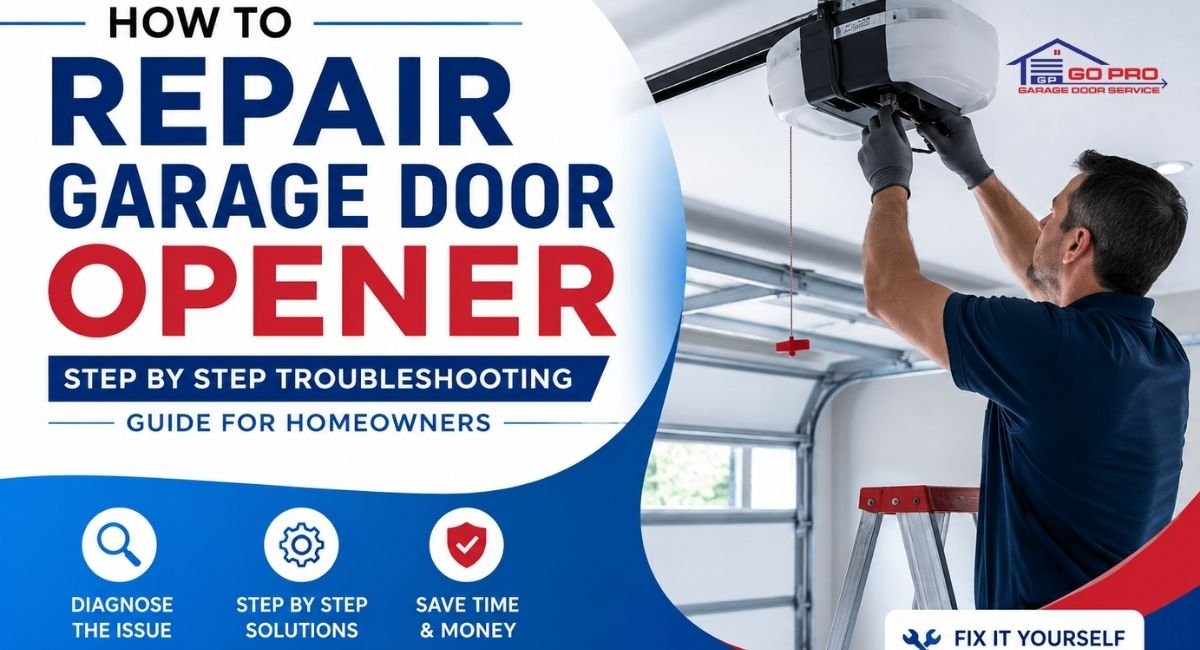
This guide on how to repair a garage door opener focuses on practical troubleshooting steps, real causes behind failures, and clear repair methods that avoid unnecessary replacement.
How a Garage Door Opener Actually Works Behind the Scenes
A garage door opener is not just a motor hanging from the ceiling. It is a coordinated system of electrical and mechanical parts working together to lift a heavy moving door safely.
Main components include:
- Motor unit: powers the lifting system
- Drive mechanism: chain, belt, or screw drive moves the door
- Safety sensors: prevent closing on objects or people
- Remote and wall switch: send signals to the opener
- Logic board: processes commands and controls movement
When one part stops functioning correctly, the entire system may behave unpredictably. For example, a weak sensor signal can stop the door from closing even if the motor is perfectly fine.
Understanding this structure helps narrow down the real issue instead of guessing.
Common Garage Door Opener Problems Homeowners Face
Most opener issues fall into predictable patterns. Identifying the symptom is the first step in solving the problem.
Typical issues include:
- Garage door not responding at all
- Door opens but refuses to close
- Remote works inconsistently
- Motor runs but door does not move
- Door reverses after touching the ground
- Flashing lights or error signals on unit
- Grinding or clicking noises during operation
Each symptom usually points to a different cause, which makes diagnosis more important than random repairs.
Quick Checks Before You Start Any Repair
Before opening tools or replacing parts, a few basic checks can solve many problems instantly.
Start with:
- Power supply check: confirm the unit is plugged in
- Circuit breaker inspection: reset if tripped
- Remote batteries: weak batteries cause delayed response
- Manual lock: ensure door is not locked
- Track blockage: remove debris or obstruction
These simple steps resolve a surprising number of service calls and should always be checked first.
Step-by-Step Guide: How to Repair Garage Door Opener Safely
This section covers structured troubleshooting methods based on the most common failures.
1. Fixing a Garage Door Opener That Won’t Respond
When nothing happens after pressing the remote or wall switch:
- Check power connection to opener
- Inspect fuse or circuit breaker
- Reset the system if needed
- Confirm wall switch wiring is intact
If the motor still does not respond, the issue may involve the logic board or internal wiring.
2. Repairing a Garage Door That Opens but Won’t Close
This is one of the most common problems.
Possible causes:
- Misaligned safety sensors
- Dirty sensor lenses
- Obstruction in door path
- Sunlight interference on sensors
Fix steps:
- Clean sensor lenses gently
- Align both sensors facing each other
- Ensure LED lights on sensors are steady
- Remove any objects blocking the path
Safety sensors are designed to stop accidents, so even a small misalignment can stop operation completely.
3. Fixing Remote Control and Wall Switch Problems
If the opener works manually but not remotely:
- Replace remote batteries
- Reprogram the remote to the opener
- Check antenna wire on motor unit
- Test wall switch wiring
Sometimes, the system simply loses synchronization after power interruptions.
4. Motor Runs but Door Does Not Move
This issue often points to mechanical failure rather than electrical.
Common causes:
- Broken drive belt or chain
- Worn-out gears inside motor
- Disengaged emergency release cord
- Loose trolley connection
Steps to check:
- Inspect chain or belt tension
- Re-engage trolley system
- Listen for motor strain sounds
- Check internal gear condition if accessible
If internal gears are damaged, replacement is often required instead of repair.
5. Fixing a Noisy or Slow Garage Door Opener
Noise is often a warning sign before failure.
Causes include:
- Lack of lubrication
- Loose mounting brackets
- Worn rollers or drive parts
- Motor strain from imbalance
Fix approach:
- Apply lubricant to moving parts
- Tighten all hardware connections
- Inspect chain tension
- Check door balance manually
Sensor Problems and Why They Stop Everything
Safety sensors are small but extremely important. They prevent the door from closing if something is in the way.
Signs of sensor issues:
- Flashing lights on opener
- Door stops midway
- Door reverses immediately
Fix steps:
- Clean sensor lenses
- Realign both units at equal height
- Check wiring connection
- Remove sunlight interference if possible
Even slight misalignment can shut down the system completely.
Garage Door Opener Reset and Reprogramming Guide
Sometimes the issue is software-related rather than mechanical.
Reset is needed when:
- System stops responding after outage
- Remote stops syncing
- Settings become unstable
Basic reset process:
- Disconnect power for a few minutes
- Restore power
- Reprogram remote and keypad
- Test full open and close cycles
This often resolves minor electronic glitches.
Common Issues and Likely Causes
| Problem | Likely Cause | Repair Level |
| Door won’t open | Power or motor issue | Basic to advanced |
| Door won’t close | Sensor misalignment | Easy |
| Remote not working | Battery or programming | Easy |
| Motor runs no movement | Drive failure | Advanced |
| Loud operation | Lack of lubrication | Easy |
Parts That Commonly Fail in Garage Door Openers
Over time, certain parts wear out faster than others:
- Drive gears inside motor unit
- Chains or belts
- Safety sensors
- Wall control switch
- Logic board in older systems
If multiple parts begin failing at once, replacement may be more practical than repeated repairs.
When DIY Repair Is Not the Right Choice
Some problems are better handled with professional tools and experience.
Avoid DIY when:
- Electrical wiring is damaged
- Motor burns out or overheats
- Door is unbalanced or heavy
- Spring tension is involved in system issues
- Repairs repeat frequently
For more complex mechanical issues, related services like garage door off-track repair and precision garage door drum repair are often required to restore safe operation.
Repair Cost vs Replacement Consideration
Repair costs vary depending on the issue:
- Minor electrical fixes: low cost
- Sensor or remote repair: moderate cost
- Motor replacement: higher cost
- Full system replacement: highest cost
If repair costs approach half the price of a new system, replacement is usually the smarter long-term option.
Maintenance Habits That Prevent Most Opener Problems
Most opener failures can be delayed or avoided with simple habits:
- Lubricate moving parts every few months
- Clean sensors regularly
- Test balance of door manually
- Replace remote batteries annually
- Inspect hardware tightening twice a year
Routine care keeps the system stable and reduces sudden breakdowns.
Related maintenance guidance, like a garage door maintenance checklist, can help structure these tasks properly.
Final Thoughts on Repairing a Garage Door Opener
Fixing a garage door opener is often about understanding patterns rather than guessing problems. Most issues come from sensors, power interruptions, mechanical wear, or simple misalignment rather than complete system failure.
A careful step-by-step approach helps identify whether the issue is minor or something that needs deeper repair. Regular maintenance also plays a major role in keeping the system running smoothly and avoiding unexpected breakdowns.
If the system continues to struggle after basic troubleshooting, professional inspection is the safest option to prevent further damage.
For homeowners looking for dependable service, Go Pro Garage Door Service provides support across installation, repair, and maintenance needs, helping ensure long-term system reliability and safer daily operation.