A garage door is one of the most frequently used mechanical systems in a home, yet it is also one of the most overlooked when it comes to regular care. It operates under constant tension, carries heavy weight, and depends on a balanced system of springs, cables, rollers, and tracks. When everything is aligned, the movement feels effortless. When one part begins to wear, the change is often subtle at first but gradually affects the entire system.
Following a structured garage door maintenance checklist for homeowners helps reduce unexpected breakdowns and improves safety. Most failures do not happen suddenly. They develop slowly through friction, misalignment, or unnoticed wear.
If you are trying to understand early warning patterns before a breakdown, guides like garage door repair signs can help connect small changes in movement or sound with real mechanical issues. For ongoing care, professional servicing such as garage door tune-up ensures the system stays balanced and properly adjusted.
Why Garage Door Maintenance Should Be Taken Seriously
A garage door system can cycle thousands of times each year. Every cycle puts controlled stress on the hardware. Springs stretch and release, cables hold tension, rollers move along metal tracks, and the opener manages weight distribution.
The problem is not immediate failure but gradual wear. A cable does not snap without warning, and a spring does not break without years of tension fatigue. These issues build silently.
When maintenance is ignored, homeowners often face situations like sudden spring failure, uneven door movement, or motor strain. In many cases, what could have been a simple adjustment turns into repairs such as garage door cable repair or even broken spring replacement.
Regular inspection reduces this risk significantly and helps maintain safe operation.
Garage Door Maintenance Checklist for Homeowners
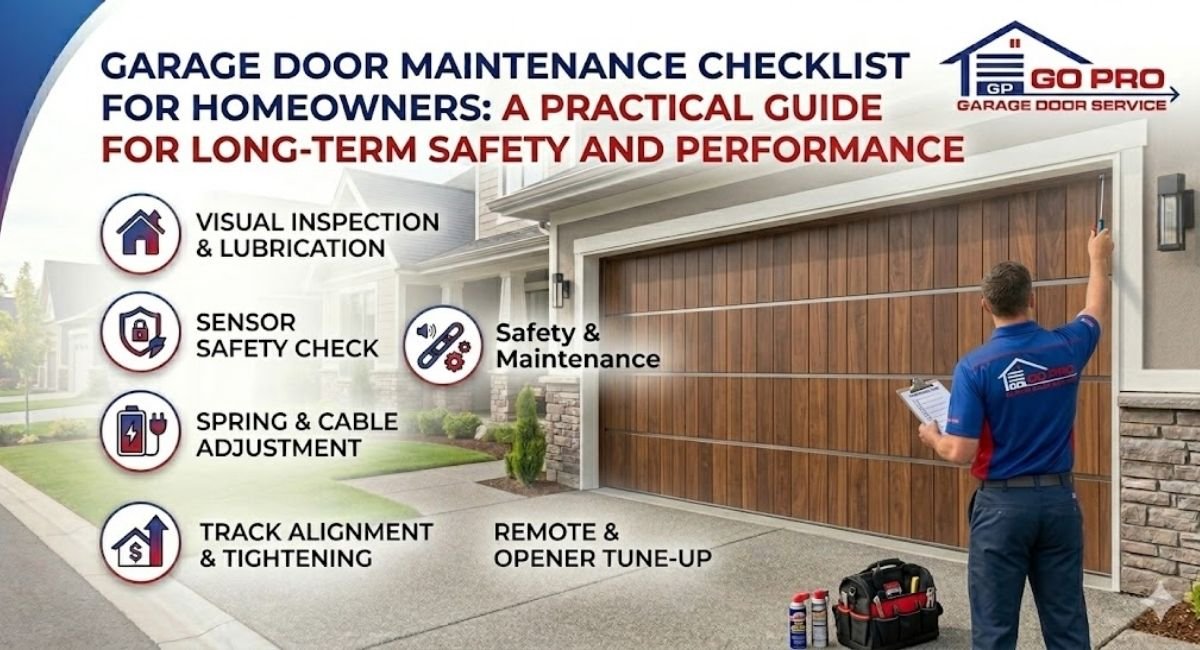
A practical maintenance routine does not need to be complicated. The goal is consistency and awareness rather than technical skill. The system below follows how professionals approach long-term care.
Visual Inspection and Movement Awareness
The simplest but most effective habit is observing the door closely during normal use. Small changes in appearance or movement often reveal early wear.
A homeowner should periodically observe whether the door sits evenly when closed, whether cables appear equally tight on both sides, and whether there is any visible rust or strain on metal components. Even slight unevenness can indicate developing tension imbalance.
After visual inspection, the movement of the door should be tested. A properly functioning door moves smoothly without hesitation, jerking, or dragging sounds. If the door begins to feel heavier than usual, it is often linked to spring fatigue or imbalance. In such cases, professional attention such as broken spring replacement may be necessary.
Balance and Spring Condition Check
The spring system carries most of the door’s weight, which is why balance is one of the most important parts of maintenance.
A simple manual test can help identify issues. When the automatic opener is disconnected and the door is lifted halfway, it should remain in place. If it drops or rises, the spring tension is no longer balanced.
This condition is important because it affects every other part of the system. An unbalanced door forces cables, rollers, and the opener to work harder than designed, which accelerates wear.
Lubrication for Smooth Movement
Friction is one of the main causes of garage door wear. Without lubrication, metal parts grind against each other, creating noise and long-term damage.
Lubrication should be applied to hinges, roller bearings, spring coils, and pivot points. It is important to avoid applying lubricant inside the tracks, as this can attract dust and create buildup that interferes with roller movement.
Many homeowners prefer combining lubrication with a professional garage door tune-up because it includes alignment checks along with proper mechanical servicing.
Hardware Stability and Tightness
Over time, vibration from daily operation loosens bolts and brackets. This affects alignment and can create small shifts in movement that worsen gradually.
A maintenance check should include ensuring that track brackets, hinge bolts, and roller fasteners remain secure. The key is not to over-tighten but to restore stability where movement has developed.
Loose hardware is often an early stage issue that later leads to track misalignment or uneven operation.
Track Alignment and Movement Path
The track system guides the entire motion of the door. Even small dents or buildup inside the track can change how smoothly the door travels.
A homeowner should pay attention to scraping sounds, uneven roller movement, or visible gaps between rollers and the track wall. These symptoms usually indicate developing alignment issues.
If ignored, the problem can progress to a situation where the door comes off track, requiring garage door off track repair.
Safety Sensor Function Check
Modern garage doors rely on safety sensors that detect obstacles in the closing path. These sensors are critical for preventing accidents.
A simple test involves placing an object under the door’s path during closing. The door should reverse immediately upon detection. If it does not, the issue may be due to lens blockage, misalignment, or wiring problems.
Sensor issues should never be delayed since they directly affect safety in daily use.
Weather Seal Condition
Weather seals protect the garage interior from dust, water, and pests. Over time, exposure to heat and environmental conditions causes seals to harden or crack.
When seals lose flexibility or create visible gaps, they should be replaced. This helps maintain insulation and prevents long-term damage to door panels and stored items.
Maintenance Schedule
| Time Frame | Maintenance Action |
| Monthly | Observe movement and check visual condition |
| Every 3–4 months | Lubrication of moving parts |
| Every 6 months | Hardware check and sensor testing |
| Annually | Full professional inspection and adjustment |
Early Signs That Indicate Developing Problems
Garage doors usually give early warning signs before major failure occurs. Recognizing these signs early helps prevent expensive repairs.
A door that feels heavier than usual, produces grinding sounds, or closes unevenly often indicates internal strain. Cable slack on one side or slow opener response can also point to mechanical imbalance.
These symptoms often lead to more serious issues such as cable failure or drum wear. In such cases, services like garage door cable repair may be required to restore safe operation.
Understanding Core Mechanical Components
The performance of a garage door depends heavily on its internal tension system. Springs carry the door’s weight, cables maintain balance, and drums control cable movement.
When springs weaken, the door becomes difficult to lift and may require replacement of broken springs. When cables wear unevenly, balance is affected and repair becomes necessary through garage door cable repair. If drums become worn, cable movement becomes inconsistent and may require garage door drum repair.
These components work together, which is why a small issue in one part often affects the entire system.
Seasonal Maintenance Considerations
Temperature changes affect metal expansion and contraction, which can slightly influence door movement and spring tension. During warmer months, lubrication and dust control become more important, while cooler periods require attention to stiffness or delayed response in movement.
Adjusting maintenance habits based on season helps maintain consistent performance throughout the year.
When Maintenance Is Not Enough
There are situations where regular maintenance cannot restore proper function. Repeated off-track movement, frequent spring failure, or continuous cable damage often indicate deeper system wear.
At this point, professional inspection becomes necessary, and in some cases, garage door installation may be a more practical long-term solution than repeated repairs. Understanding cost and value comparisons through garage door installation cost and replacement benefits can help make informed decisions.
Final Thoughts
A garage door maintenance checklist for homeowners is not about complex technical work. It is about building awareness and consistency. Small checks performed regularly prevent larger failures that often happen without warning.
When combined with professional servicing such as garage door tune-up, the system remains safer, smoother, and more reliable over time.
For inspection, repair, or full maintenance support, Go Pro Garage Door Service offers complete solutions. You can explore more through garage door services when professional help is required.