A garage door spring is one of the most important parts of the entire door system because it carries almost all the lifting weight. When it breaks, the door usually becomes heavy, stuck, or unsafe to move. Many homeowners start searching for how to repair broken garage door spring, but what they often do not realize is that this is one of the highest tension components in the system and requires careful handling.
Before attempting anything, it is important to understand how the system works, what signs indicate failure, and when repair should not be attempted at all. In many cases, issues also appear alongside cable or opener strain, which is why understanding connected systems like garage door cable repair and garage door opener troubleshooting helps you see the bigger picture of how the entire door system behaves.
This guide explains the system in simple terms, shows the repair process, and highlights safety concerns without overcomplicating things.
Understanding the Garage Door Spring System
Garage door springs are responsible for balancing the heavy weight of the door so it can open smoothly. Without them, even a strong motor struggles to lift the door.
There are two main types used in homes.
Torsion Spring System
Torsion springs sit above the garage door and work by twisting tightly to store energy. When the door opens, that stored energy helps lift the weight evenly.
They are commonly used in modern systems because they offer smoother movement and better balance. However, when they break, they usually stop the entire system immediately.
Extension Spring System
Extension springs are placed on both sides of the door tracks. They stretch and contract as the door moves.
These are more common in older systems and often include safety cables. When one breaks, the door may become uneven or tilt during movement.
Both systems are under high tension, which is why handling them without proper tools is risky.
Why Garage Door Springs Fail Over Time
Springs do not fail suddenly without reason in most cases. They weaken gradually over time due to repeated use and environmental conditions.
Common causes include:
- Normal wear from daily cycles
- Rust buildup due to moisture exposure
- Lack of lubrication
- Incorrect spring sizing during installation
- Constant temperature changes affecting metal tension
Each full open and close cycle adds stress, and over thousands of cycles the metal slowly loses strength until it eventually breaks.
Common Signs of a Broken Garage Door Spring
Spring failure usually gives clear warning signs before complete breakdown.
| Symptom | What It Usually Means |
| Loud snapping sound | Spring has broken instantly |
| Door feels very heavy | Spring is no longer supporting weight |
| Door opens partially then stops | Loss of lifting tension |
| Visible gap in spring coil | Torsion spring is broken |
| Door closes too fast | No controlled tension left |
Other signs include loose cables or uneven door movement. When these appear, the system is already under failure conditions.
Tools Needed for Garage Door Spring Repair
Repairing or replacing a spring requires specific tools because standard household tools are not designed for high tension work.
Essential tools include a winding bar set, adjustable wrench, locking pliers, safety gloves, protective eyewear, and a stable ladder. Measuring tools are also needed to match correct spring size.
Using the wrong tools can lead to loss of control during tension release, which is why professionals rely on specialized equipment for this work.
Safety Precautions Before Starting Repair
This is the most important part of the entire process. Garage door springs store a large amount of energy even when the door is not moving.
Before any repair attempt:
- Disconnect the garage door opener completely
- Keep the workspace clear and stable
- Never place hands near tension points without tools
- Avoid working alone if possible
If the spring is fully broken or the door is stuck at an angle, it is safer to stop immediately and avoid further handling.
High tension systems do not give second chances, and improper handling can damage the door or cause injury.
How to Repair Broken Garage Door Spring Step-by-Step Overview
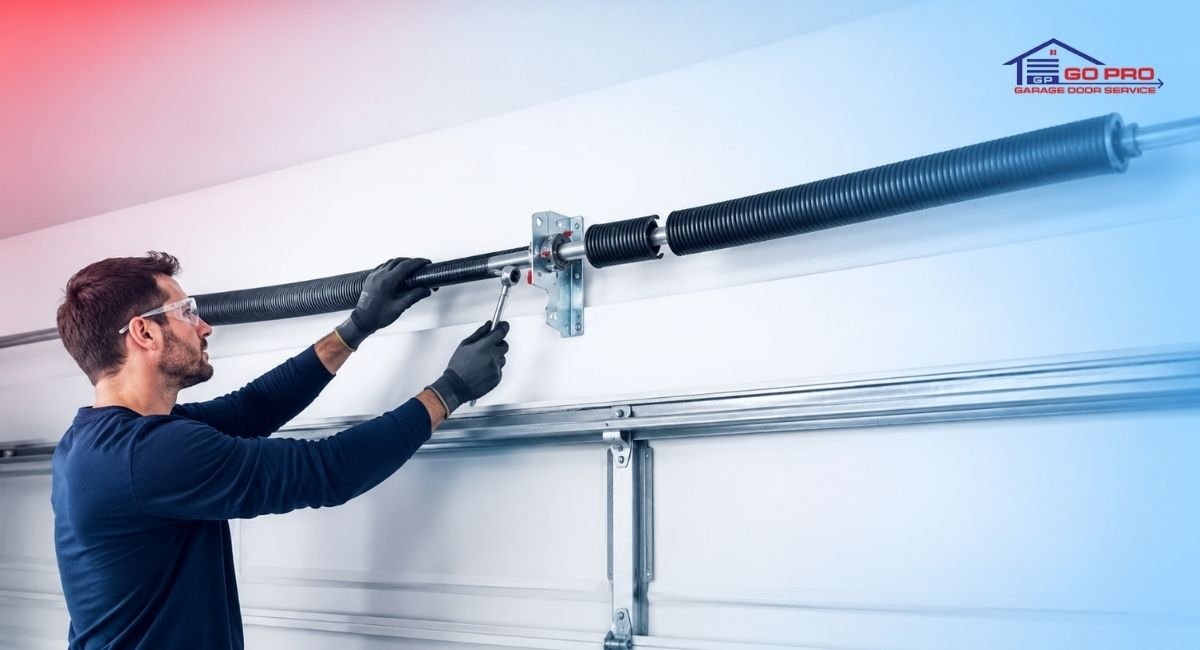
Understanding the process helps you see what technicians actually do during repair, even if you are not performing it yourself.
The first step is identifying the spring type since torsion and extension systems use different methods. After that, any remaining tension is carefully released using proper tools. The damaged spring is then removed and replaced with a correctly sized one.
Once installed, the new spring is wound to precise tension levels so the door can lift evenly. Finally, the door is tested manually to confirm balance before reconnecting the opener.
Even though the process sounds straightforward, each step requires control and accuracy because small mistakes can affect the entire system.
Garage Door Spring Replacement vs Repair
In most real-world cases, springs are replaced rather than repaired because metal fatigue cannot be reversed.
| Factor | Repair | Replacement |
| Safety | Lower reliability | Higher safety |
| Lifespan | Short-term fix | Long-term solution |
| Cost | Temporary savings | Better long-term value |
A typical spring lasts around 7 to 10 years depending on usage cycles. Once it fails, replacement is usually the most practical option.
Common Mistakes During Garage Door Spring Repair
Many problems happen because of small but critical errors during handling.
Some of the most common mistakes include using incorrect spring size, applying uneven tension, ignoring cable alignment, or failing to balance the door after installation.
Even one mistake can cause uneven lifting or put stress on other parts of the system such as rollers or tracks.
How to Extend Garage Door Spring Life
Although springs will eventually wear out, their lifespan can be extended with proper care.
Simple habits include regular lubrication, checking door balance occasionally, and avoiding unnecessary opening cycles. Keeping the system clean and scheduling periodic inspections also helps reduce stress on the springs.
These small steps often delay major failures and keep the entire system running more smoothly.
When to Call a Professional Garage Door Technician
There are situations where DIY repair should not be attempted at all.
If the spring is completely snapped, the door is stuck under uneven pressure, or multiple components like cables and drums are also affected, professional help is the safer option.
Complex systems such as garage door drum repair or off-track correction, require trained handling to avoid further damage.
Final Thoughts
A broken garage door spring is not just a minor inconvenience. It affects the entire balance of the door system and requires careful handling due to high tension forces. While understanding how the system works is helpful, actual repair often goes beyond basic DIY comfort levels.
Most homeowners benefit more from replacement rather than repair, especially when safety and long-term performance are considered. Regular maintenance remains the most reliable way to avoid sudden failures and extend system life.
For safe and reliable service, Go Pro Garage Door Service provides professional support for garage door spring replacement, system repair, and full garage door maintenance to ensure smooth and secure operation over time.
Related Topics: