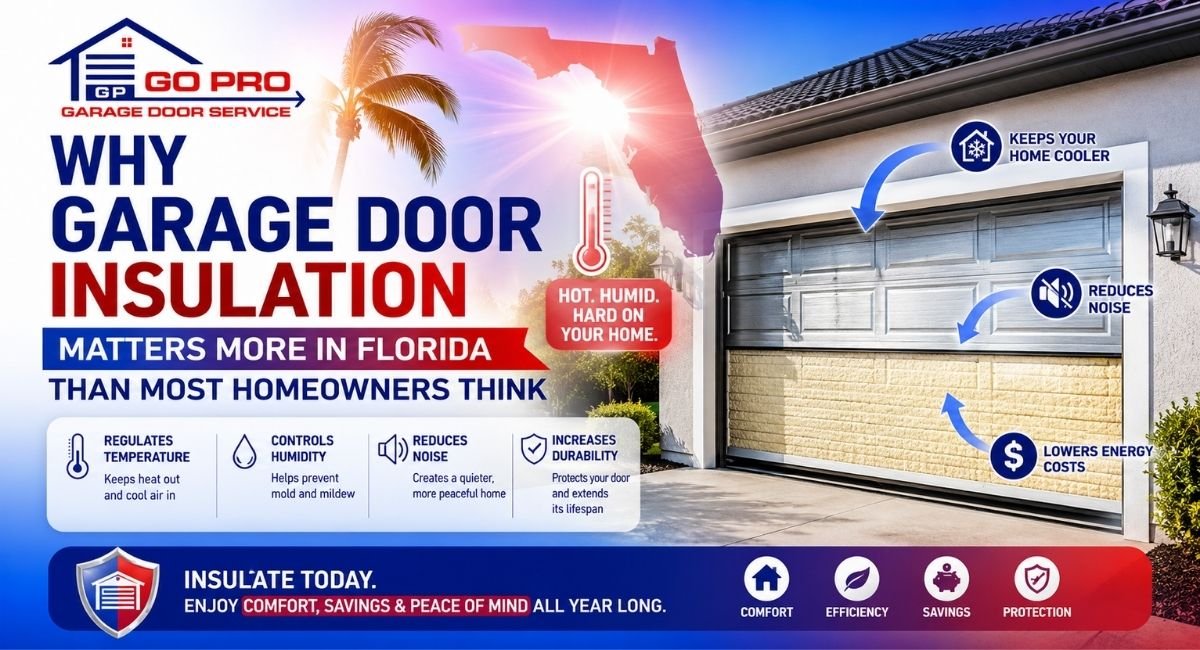
When homeowners think about keeping their houses cool in Florida, they usually focus on the air conditioner, attic insulation, or energy-efficient windows. The garage door rarely gets much attention. Yet, it is often the largest moving part of a home and one of the biggest surfaces exposed to direct sunlight.
In many Florida homes, the garage becomes unbearably hot by early afternoon. Temperatures inside can easily climb well above the outdoor temperature, especially when the garage door faces west or south. That trapped heat does not stay inside the garage. It gradually moves into adjacent rooms, forcing the air conditioner to work harder throughout the day.
This is why garage door insulation Florida homeowners choose can make a noticeable difference. A properly insulated garage door helps reduce heat transfer, improves garage temperature control, protects stored belongings, and contributes to lower cooling costs. Even if your garage is not air-conditioned, insulation can improve comfort while supporting better garage energy efficiency throughout the year.
Whether you use your garage for parking, storage, a home gym, or a workshop, adding insulation is one of the most practical improvements you can make in Florida’s demanding climate.
Why Florida’s Climate Makes Garage Door Insulation More Important
Florida presents unique challenges that homeowners in cooler regions rarely experience. High temperatures, intense sunlight, and year-round humidity constantly affect every part of a home, including the garage.
Unlike northern states where insulation mainly helps retain heat during winter, Florida homeowners benefit from insulation because it slows the movement of outdoor heat into the garage.
Several environmental factors contribute to this need.
Intense Solar Heat
Garage doors receive hours of direct sunlight every day. Metal doors absorb large amounts of heat and quickly become hot to the touch.
Without thermal insulation, that heat passes through the door and raises indoor garage temperatures significantly.
A dark-colored steel garage door can become extremely hot during summer afternoons, making the garage uncomfortable for several hours after sunset.
High Humidity Levels
Florida’s humidity adds another challenge.
Warm, moist air entering an overheated garage increases condensation risks, especially when temperatures change overnight. Excess moisture may affect:
- Cardboard storage boxes
- Power tools
- Sporting equipment
- Holiday decorations
- Electronics
- Paint and chemicals
Proper insulation helps moderate temperature swings, reducing conditions that encourage moisture buildup.
Long Cooling Seasons
Unlike many parts of the country, Florida homeowners rely on air conditioning for much of the year.
According to the EPA Energy Star program, improving a home’s thermal envelope helps reduce unnecessary energy loss and can lower cooling demands when combined with other efficiency upgrades.
Every source of unwanted heat matters, including an uninsulated garage door.
How Heat Moves Through an Uninsulated Garage Door
Many homeowners underestimate how quickly heat passes through a garage door.
The process is surprisingly simple.
As sunlight heats the outside surface, that heat transfers through the metal panels into the garage interior.
This process is known as heat transfer.
Without insulation, there is very little resistance preventing heat from entering the garage.
Imagine placing your hand against a metal garage door on a July afternoon. If it feels almost too hot to touch, that same heat is radiating into the garage throughout the day.
Insulation creates a barrier that slows this movement.
Instead of allowing heat to pass directly through the door, insulated panels reduce the speed of thermal transfer, helping maintain a more stable indoor temperature.
What Is Garage Door Insulation?
Garage door insulation refers to materials installed inside garage door panels to reduce heat flow between the outdoors and the garage interior.
Modern insulated garage doors are manufactured with insulation already built into the panels, while existing doors can often be upgraded using insulation kits.
The most common insulation materials include:
Polystyrene Insulation
Polystyrene panels are lightweight and affordable.
They provide moderate insulation and improve overall comfort compared to non-insulated doors.
This option works well for homeowners seeking an economical upgrade.
Polyurethane Insulation
Polyurethane insulation offers significantly better thermal performance.
Instead of inserting rigid panels, polyurethane foam expands inside the door cavity, bonding directly to both steel layers.
This creates:
- Higher structural strength
- Better thermal insulation
- Improved noise reduction
- Increased door durability
For Florida homeowners dealing with intense heat, polyurethane insulation is generally considered the premium choice.
Understanding R-Value
When shopping for insulated garage doors, you will often encounter the term R-value.
R-value measures how effectively insulation resists heat transfer.
The higher the R-value, the better the insulating performance.
| R-Value | Insulation Performance | Best Use |
| 0 to 3 | Minimal | Uninsulated doors |
| 4 to 8 | Moderate | Basic residential garages |
| 9 to 13 | Good | Attached garages |
| 14 and above | Excellent | Florida homes seeking maximum energy efficiency |
A higher R-value does not eliminate heat entirely, but it significantly slows the amount entering your garage.
How Garage Door Insulation Improves Garage Energy Efficiency
Many attached garages share at least one wall with the living space.
Some even have bedrooms directly above them.
When the garage becomes extremely hot, surrounding rooms absorb that heat through walls, ceilings, and connecting doors.
This creates additional work for your HVAC system.
An insulated garage door reduces this heat gain.
Benefits include:
- Less heat entering the garage
- More stable indoor temperatures
- Reduced strain on air conditioning
- Better overall garage energy efficiency
- Improved indoor comfort
Although savings vary by home design and usage habits, many homeowners notice lower cooling costs after improving garage insulation.
The Difference Between Insulated and Non-Insulated Garage Doors
At first glance, the two door types appear similar.
The difference becomes noticeable after months of daily use.
Non-Insulated Garage Doors
These doors typically consist of a single layer of steel or aluminum.
Advantages include:
- Lower purchase price
- Lightweight construction
- Simple installation
However, drawbacks include:
- Higher heat transfer
- Increased outside noise
- Less structural rigidity
- Greater indoor temperature fluctuations
Insulated Garage Doors
These doors include insulated panels placed between steel layers.
Advantages include:
- Better temperature control
- Increased durability
- Quieter operation
- Improved energy performance
- Greater comfort year-round
For most Florida homeowners, the long-term benefits outweigh the higher upfront investment.
Protecting Everything Stored Inside Your Garage
Many garages contain much more than vehicles.
Common stored items include:
- Lawn equipment
- Power tools
- Sports gear
- Seasonal decorations
- Household supplies
- Paint products
- Cleaning chemicals
- Extra refrigerators
- Freezers
Extreme heat shortens the lifespan of many materials.
Rubber components may dry out faster.
Plastic containers can warp.
Electronics deteriorate more quickly when repeatedly exposed to excessive temperatures.
Garage insulation helps moderate these conditions and creates a safer storage environment.
If you’re evaluating whether your current garage door is still performing efficiently, it may also help to review the garage door repair signs before deciding whether insulation alone is enough.
Better Comfort for Multi-Purpose Garages
Today’s garages often serve multiple purposes beyond vehicle storage.
Many Florida homeowners use them as:
- Home gyms
- Hobby workshops
- Home offices
- Laundry rooms
- Craft spaces
- Home improvement areas
Working inside an uninsulated garage during summer can become exhausting.
An insulated door helps reduce peak temperatures, making these spaces more usable throughout the day.
While insulation does not replace air conditioning, it significantly improves overall garage temperature control by slowing the constant flow of outdoor heat.
Is Garage Door Insulation Worth the Investment in Florida?
For most Florida homeowners, the answer is yes.
Unlike home improvements that only provide seasonal benefits, garage door insulation offers value throughout the year. Florida’s warm climate means your garage is exposed to heat for much longer than homes in northern states. That makes insulation a practical upgrade rather than an optional feature.
The actual return on investment depends on several factors, including:
- Whether your garage is attached or detached
- The direction your garage door faces
- Your home’s insulation levels
- The type of garage door you currently have
- How often you open and close the garage door
- Whether your garage is used as living or workspace
If your garage shares walls with bedrooms, a laundry room, or a kitchen, insulation becomes even more valuable because it helps reduce unwanted heat entering those areas.
Many homeowners notice that their garage feels more comfortable during the afternoon, while nearby rooms stay cooler with less effort from the air conditioning system.
Signs Your Garage Door Needs Better Insulation
Not every garage requires a complete door replacement. In some cases, adding insulation to an existing door can provide meaningful improvements.
Here are common signs your garage door may benefit from insulation.
The Garage Feels Like an Oven
If stepping into your garage during summer feels dramatically hotter than the outdoor temperature, excessive heat transfer is likely occurring through the garage door.
Rooms Next to the Garage Stay Warm
An attached garage often transfers heat into surrounding walls.
If your bedroom, kitchen, or family room always seems warmer than the rest of the house, the garage could be contributing to the problem.
Your Garage Door Is Noisy
Modern insulated garage doors are generally quieter because insulated panels reduce vibration.
If your current door rattles loudly every time it opens or closes, upgrading to an insulated model can noticeably reduce noise.
You Spend Time Inside the Garage
A workshop, home gym, or hobby room becomes much more comfortable when temperatures remain more stable.
You Plan to Replace the Garage Door Anyway
If your current door is nearing the end of its lifespan, replacing it with an insulated model often provides better long-term value than purchasing another non-insulated door.
If you’re unsure whether it’s time for a replacement, this guide on garage door lifespan can help you evaluate the condition of your existing system.
Can You Add Insulation to an Existing Garage Door?
Yes, but the results depend on the type and condition of the door.
Many single-layer steel garage doors can be upgraded using insulation kits that fit inside each panel.
These kits usually include rigid foam boards or reflective insulation.
While they improve thermal performance, they generally cannot match the effectiveness of factory-built insulated garage doors that use polyurethane insulation between double steel panels.
Professional installers also consider factors such as:
- Door balance
- Spring tension
- Additional panel weight
- Opener settings
- Track alignment
Adding insulation changes the overall weight of the garage door. Springs and openers may need adjustment afterward to keep the system operating safely.
If your door already shows wear, it is worth performing a complete inspection before adding insulation. A comprehensive garage door maintenance checklist can help identify problems that should be addressed first.
Choosing the Right Insulated Garage Door
Not every insulated garage door provides the same performance.
Here are the most important factors to consider before making a decision.
Material
Steel remains the most common choice because it offers durability and works well with insulated construction.
Aluminum is lighter but generally provides less insulation unless specifically designed as an insulated door.
Composite and wood doors may also include insulation, although they often cost more.
If you’re comparing materials, reading about aluminum vs steel garage doors can help you understand the strengths of each option.
Insulation Type
For Florida homes, polyurethane insulation usually delivers the best performance because it fills every cavity inside the door.
Polystyrene offers moderate insulation at a lower cost.
R-Value
Higher R-values improve thermal resistance.
However, homeowners should balance insulation performance with budget and expected usage.
For most attached garages in Florida, choosing a door with a good R-value offers an excellent balance between comfort and cost.
Weather Seals
Even the best insulated garage door loses effectiveness if outside air enters through gaps.
Look for quality:
- Bottom seals
- Side weather stripping
- Top seals
- Tight panel joints
Together, these components improve garage temperature control while keeping dust, rain, and insects outside.
Garage Door Insulation and Noise Reduction
One benefit homeowners often overlook is quieter operation.
Insulated garage doors absorb vibration much better than single-layer steel doors.
This reduces:
- Panel vibration
- Street noise
- Rain impact
- Wind noise
- Door rattling
If bedrooms are located above or beside the garage, the reduction in operating noise can make a noticeable difference.
Common Myths About Garage Door Insulation
Many homeowners delay upgrading because of common misconceptions.
Myth 1: Florida Is Too Warm for Insulation
Reality: Insulation works in both directions.
It helps keep heat outside during summer and slows heat loss during occasional cold winter nights.
Myth 2: My Garage Isn’t Air Conditioned
Reality: Even without air conditioning, lowering garage temperatures helps reduce heat entering the rest of the house.
Myth 3: Only Expensive Homes Need Insulated Garage Doors
Reality: Garage insulation benefits homes of many sizes because it improves comfort and energy efficiency.
Myth 4: Insulation Solves Every Temperature Problem
Reality: Insulation reduces heat transfer but does not eliminate heat completely.
Proper attic insulation, weather sealing, ventilation, and efficient HVAC systems also contribute to overall home performance.
When Professional Installation Makes Sense
Installing insulation may appear simple, but garage doors are heavy mechanical systems with high-tension components.
Professional installation helps ensure:
- Correct spring balance
- Proper opener adjustment
- Safe operation
- Maximum insulation performance
- Correct weather sealing
If you’re replacing the entire door, professional installation also protects manufacturer warranties and ensures local building code compliance.
For homeowners considering a complete upgrade, a professional garage door installation service can recommend insulated doors that match your home’s style, budget, and energy goals.
If your current system is noisy or struggling after years of use, scheduling a garage door tune-up before peak summer can also improve performance.
In some cases, homeowners discover that insulation alone isn’t enough because damaged cables, worn rollers, or broken springs are affecting the door’s operation. If that happens, a broken spring replacement should be completed before any insulation upgrades are considered.
Garage Door Insulation at a Glance
| Feature | Non-Insulated Garage Door | Insulated Garage Door |
| Heat Transfer | High | Low |
| Garage Temperature Control | Limited | Much Better |
| Energy Efficiency | Lower | Higher |
| Cooling Costs | Usually Higher | Can Be Reduced |
| Noise Reduction | Minimal | Significant |
| Door Strength | Standard | Improved |
| Long-Term Comfort | Lower | Higher |
Frequently Asked Questions
1. Does garage door insulation really reduce cooling costs?
It can. While every home is different, reducing heat transfer through the garage helps decrease the cooling load on nearby living spaces, especially in attached garages.
2. What is the best insulation for garage doors in Florida?
Polyurethane insulation is generally considered the best option because it provides a higher R-value, stronger door construction, and better thermal performance than many other insulation types.
3. Can I insulate my existing garage door?
Yes. Many existing steel garage doors can be upgraded with insulation kits. However, factory-insulated doors usually provide better overall performance.
4. Is an insulated garage door worth the extra cost?
For many Florida homeowners, yes. The improved comfort, quieter operation, increased durability, and potential energy savings often justify the additional investment over time.
5. Does garage door insulation help during winter?
Yes. Although Florida winters are relatively mild, insulation helps stabilize garage temperatures year-round by slowing heat movement in either direction.
6. Will insulation make my garage air conditioned?
No. Insulation does not cool the garage by itself. Instead, it reduces the amount of outside heat entering the space, helping maintain a more stable temperature.
Final Words
Garage door insulation is one of the most overlooked improvements for Florida homes, yet it can have a meaningful impact on comfort, energy efficiency, and the lifespan of your garage door. Because the garage is often exposed to intense sunlight for hours each day, an uninsulated door becomes a major source of heat transfer that affects both the garage and nearby living spaces.
Choosing an insulated garage door with the right insulation material, a suitable R-value, and quality weather sealing can help improve garage temperature control, reduce outside noise, and lessen the strain on your home’s cooling system. Whether you use your garage for parking, storage, or as an active workspace, insulation creates a more comfortable and practical environment throughout the year.
If your current garage door is aging, damaged, or simply not performing well in Florida’s climate, professional guidance can help you choose the right solution. Go Pro Garage Door Services provides expert garage door installation, repairs, tune-ups, and insulated garage door solutions designed for homeowners across the Orlando area. An experienced inspection can determine whether adding insulation or replacing the door is the better long-term investment for your home.