The Early Signs Your Garage Door Is Trying to Tell You Something
A garage door usually does not fail suddenly. It communicates problems in advance through small changes in sound, speed, and movement. Most homeowners notice these changes but delay action because the door still “works.”
That is where issues begin to grow.
A slight delay when opening, a faint grinding sound, or a door that feels heavier than usual are often early garage door repair warning signs. These signals may seem harmless, but they often point to wear in springs, rollers, cables, or the opener system.
A garage door is one of the most frequently used mechanical systems in a home. Every opening and closing cycle places stress on components that are under constant tension. Over time, even high quality systems from brands like LiftMaster, Chamberlain, and Genie begin to show wear.
The key is not waiting for a complete breakdown. It is recognizing the early signs and responding before the damage spreads across the system.
Why Small Garage Door Issues Become Serious Problems
A garage door system works through balance. Springs counteract the heavy weight of the door, cables guide movement, rollers reduce friction, and the opener provides controlled force.
When one part weakens, the entire balance shifts.
A worn spring, for example, forces the opener motor to work harder. That added strain can lead to overheating or electrical failure. Similarly, a misaligned track can cause uneven movement, which increases cable tension on one side.
Most major garage door failures begin as minor issues that were ignored.
Understanding garage door repair warning signs helps prevent situations where a simple adjustment turns into a full system replacement.
Noises That Should Never Be Ignored
A garage door always makes some sound, but changes in that sound are often the first warning.
Grinding noises usually suggest friction between metal components, often from worn rollers or dry tracks. A squeaking sound is commonly related to lack of lubrication in hinges or springs. A loud bang is more concerning and often points to a failing spring.
Some homeowners try quick fixes using general lubricants such as products from WD-40. While these may temporarily reduce noise, they are not a long term solution for load bearing components.
A properly maintained garage door should sound consistent from one cycle to the next. Any sudden change in sound is one of the most important garage door repair warning signs.
Delayed or Sluggish Door Movement
A healthy garage door responds immediately when activated. If there is a delay, even of a few seconds, it indicates resistance somewhere in the system.
This resistance may come from weakening springs that no longer assist the opener effectively. It may also come from a motor that is starting to struggle due to increased load.
In smart systems like those offered by Chamberlain, delays can sometimes appear as connectivity issues. However, if the delay is present both through remote apps and wall controls, the issue is likely mechanical.
Sluggish movement should always be taken seriously because it often signals increasing stress on the opener system.
When the Door Refuses to Open or Close Fully
One of the most noticeable garage door repair warning signs is incomplete movement. The door may stop halfway, reverse unexpectedly, or refuse to close entirely.
This behavior is often linked to safety sensors located near the base of the tracks. These sensors use an infrared beam to detect obstructions. When they are dirty or misaligned, the system assumes something is blocking the door.
However, when sensors are functioning correctly and the issue persists, the cause is usually mechanical. Weak springs or damaged cables often prevent the door from completing its cycle.
This is not just a convenience issue. A door that does not close fully can compromise home security.
Uneven Movement and Balance Problems
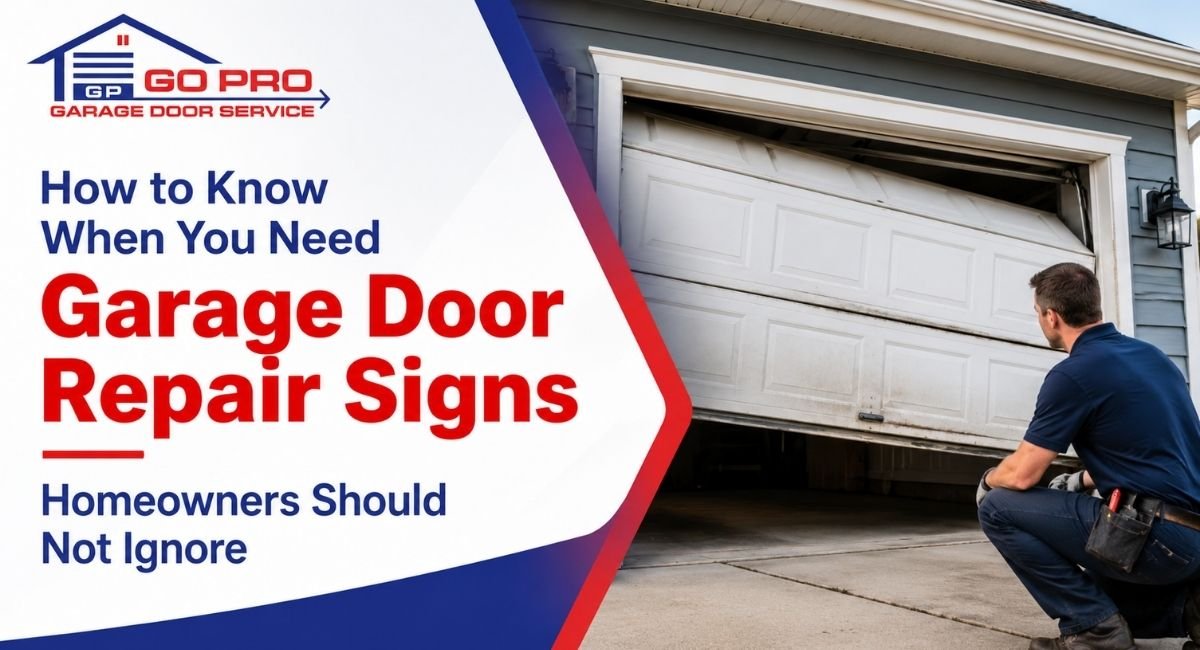
A properly balanced garage door should move smoothly and stay in place when partially opened manually. If one side moves faster than the other or the door appears tilted, the system is unbalanced.
This often results from uneven spring tension or cable wear. In some cases, rollers begin to degrade, causing one side to drag along the track.
Instead of listing symptoms, it is helpful to think of balance as the foundation of the entire system. Once balance is lost, every other component begins to wear faster.
Uneven movement is one of the most important garage door repair warning signs because it often leads to sudden system failure if ignored.
Broken Springs and Why They Are Critical
Springs carry the full weight of the garage door. Without them, even a lightweight door becomes extremely heavy.
Most residential systems use either torsion springs mounted above the door or extension springs positioned along the sides. When these springs weaken or break, the system loses its ability to lift properly.
A broken spring often reveals itself through a loud snapping sound or a door that suddenly becomes too heavy to lift manually. In many cases, the opener motor may attempt to lift the door but fail.
This is one of the most serious garage door repair warning signs because it directly affects safe operation. Spring replacement, including replacement spring for garage door in Florida, requires specialized tools and training due to the high tension involved.
Cable Wear and Fraying Issues
ables work alongside springs to control lifting and lowering. They are under constant tension and gradually wear over time.
Fraying cables may appear as loose strands near the bottom or sides of the door. Sometimes one cable becomes slack while the other remains tight, causing uneven movement.
A cable failure can cause the door to drop unevenly, which may damage vehicles or flooring. This makes cable wear a high priority warning sign that should not be delayed and should be addressed through professional garage door cable repair FL to restore safe and balanced operation.
Sensor Malfunctions and Safety System Behavior
Modern garage doors rely on safety sensors to prevent accidents. These small devices communicate using an infrared beam.
When they malfunction, the door may reverse unexpectedly or refuse to close. Sometimes indicator lights begin flashing, signaling a disruption in alignment.
In many cases, simple cleaning resolves the issue. Dust or spider webs can block the sensor beam. However, repeated problems may indicate wiring or internal control issues in the opener system.
Safety sensors are essential, and any irregular behavior should be treated as a garage door repair warning sign rather than a minor inconvenience.
Remote and Keypad Inconsistencies
When a garage door remote or keypad starts working inconsistently, it is often easy to assume the battery is the problem. While that is sometimes true, repeated failures suggest deeper issues.
Signal interference, worn receiver components, or internal opener faults can all cause communication problems.
If multiple control methods begin failing at the same time, the issue is likely within the opener system rather than the external devices.
Excess Vibration During Operation
A garage door should glide smoothly along its tracks. If you notice shaking or vibration, something is loose or worn.
This may come from loose track brackets, worn rollers, or imbalance in the spring system. Over time, vibration increases wear on all connected parts, creating a cycle of deterioration.
Unlike noise, vibration is often more subtle, but it is equally important as a garage door repair warning sign.
Motor Strain and Overheating Signs
When a garage door system begins to fail mechanically, the opener motor compensates by working harder.
Signs of strain include louder operation, slower lifting, or occasional shutdowns due to overheating protection systems. Openers from LiftMaster are designed with thermal safety features that shut the motor off when it becomes too hot.
If overheating happens frequently, it usually means the door system is creating too much resistance.
Weather Seal Damage and Light Gaps
The bottom seal of a garage door plays an important role in insulation and protection. When it becomes worn or damaged, you may notice light entering from underneath the door.
While this may seem minor, it often indicates alignment or sagging issues in the door itself. Over time, this can lead to moisture intrusion and pest entry.
Weather seal issues are often early indicators of structural changes in the door.
Common Garage Door Repair Warning Signs Summary
| Warning Sign | Likely Cause | Severity |
| Grinding or scraping noise | Roller or track wear | Medium |
| Door stops halfway | Spring or sensor issue | High |
| Uneven movement | Cable or balance problem | High |
| Slow response | Motor strain or weak springs | Medium |
| Loud snapping sound | Broken spring | Critical |
| Cable fraying | Wear and tension failure | Critical |
What You Can Safely Check at Home
Some garage door issues can be checked without professional tools. You can inspect visible cables for fraying, test remote batteries, and clean safety sensors with a soft cloth.
You can also observe how the door behaves during manual operation. If it does not stay halfway open, the balance system may need attention.
These checks are simple and safe, but they are not a substitute for professional repair when deeper mechanical issues exist.
When Professional Repair Becomes Necessary
Certain situations require immediate professional attention. These include broken springs, visible cable damage, or a door that has come off its track.
At this stage, continued use can increase damage and create safety risks. Professional technicians use specialized tools such as winding bars and calibrated tension systems to safely restore balance.
Platforms like HomeAdvisor and Angi are often used by homeowners to find qualified repair specialists.
Preventive Maintenance That Extends System Life
Regular maintenance significantly reduces the likelihood of unexpected failures. A simple routine that includes lubrication of moving parts, inspection of cables, and tightening of hardware can extend system life.
Cleaning tracks and testing balance periodically also helps detect early changes before they become serious problems.
Most garage door repair warning signs develop slowly, which means they can often be prevented with consistent attention.
Realistic Example of How Problems Escalate
A common scenario starts with a faint squeak during operation. The homeowner ignores it or applies lubricant. Weeks later, the door begins to move unevenly. Eventually, a spring fails and the door becomes stuck.
What began as a minor noise evolves into a full mechanical failure involving multiple components.
This progression is extremely common and highlights why early recognition matters.
Choosing the Right Repair Professional
Selecting the right technician ensures long term reliability. A qualified professional should have experience with major systems like Genie, Chamberlain, and LiftMaster.
Clear pricing, warranty coverage, and proper licensing are also important factors when choosing a service provider.
FAQ: Garage Door Repair Warning Signs
What is the earliest warning sign of garage door problems?
Unusual noise or slight delay in movement is often the first indication that something is wearing out.
Why does my garage door open unevenly?
Uneven movement is usually caused by spring imbalance or cable wear.
Can I ignore a noisy garage door if it still works?
It is not recommended. Noise often indicates friction or wear that can lead to failure.
How often should garage door maintenance be done?
Basic inspection and lubrication should be done at least twice a year.
Is a broken spring dangerous?
Yes, it is one of the most critical failure points and should only be handled by professionals.
Don’t Wait for a Small Issue to Become a Costly Repair
A garage door rarely fails without warning. It usually gives clear signals first, such as unusual noises, uneven movement, slow response, or visible wear in springs and cables. These garage door repair warning signs are not random inconveniences, they are early indicators that the system is under stress.
The key difference between a simple repair and a major replacement is timing. When issues are identified early, repairs are usually quick and affordable. When ignored, they often spread across multiple components, turning a small problem into a full system failure.
Regular inspection, basic maintenance, and paying attention to changes in performance can significantly extend the life of your garage door system. But when the signs become consistent or severe, professional help is the safest and most practical choice.
Professional Help You Can Rely On
If you are noticing any of the warning signs discussed in this guide, it is best not to delay inspection or repair. Garage door systems involve high tension components and precision alignment, which require trained handling.
For safe, reliable, and professional service, you can contact Go Pro Garage Doors. Their team specializes in diagnosing and repairing all types of garage door issues, from broken springs and cable problems to opener malfunctions and full system tune ups.
Whether your door is stuck, making unusual noises, or simply not operating the way it used to, getting it checked early can prevent costly damage and restore smooth, safe operation.
Go Pro Garage Doors is a trusted option when you need fast, practical, and professional garage door repair support.