A damaged garage door is more than an inconvenience. It can leave your home exposed to weather, pests, theft, and costly structural problems. In Florida, where hurricanes, tropical storms, and strong winds are common, garage doors often take the first impact during severe weather. Even a single damaged panel or bent track can affect the safety and security of your home.
Many homeowners assume their insurance policy will automatically pay for every type of garage door repair. That assumption can lead to expensive surprises when a claim is denied because the damage falls outside the policy’s covered perils.
Understanding garage door insurance coverage before damage occurs helps you make informed decisions, prepare the right documentation, and avoid unnecessary repair costs. Whether your garage door was damaged by a hurricane, high winds, a falling tree, or another unexpected event, knowing how homeowners insurance works can make the claims process much smoother.
This guide explains exactly what homeowners insurance usually covers, what it excludes, how insurance deductibles affect payouts, and what you should do immediately after your garage door is damaged.
Why Garage Door Damage Matters More Than Most Homeowners Realize
Your garage door is one of the largest moving components of your home. It also plays an important role in protecting your property’s structure.
When the garage door fails, it can create several risks:
- Water intrusion
- Increased wind pressure during storms
- Security concerns
- Damage to vehicles
- Damage to stored belongings
- Higher repair costs if left untreated
In Florida, garage doors are especially important because they help maintain the structural integrity of the home during hurricanes. According to FEMA, a failed garage door can allow strong winds to enter the home, increasing internal pressure and potentially contributing to roof failure during severe storms.
Likewise, NOAA regularly reports that high winds and severe thunderstorms are among the most common weather hazards affecting residential properties across Florida each year.
For this reason, homeowners should inspect garage door damage immediately after any major weather event.
Does Homeowners Insurance Cover Garage Door Damage?
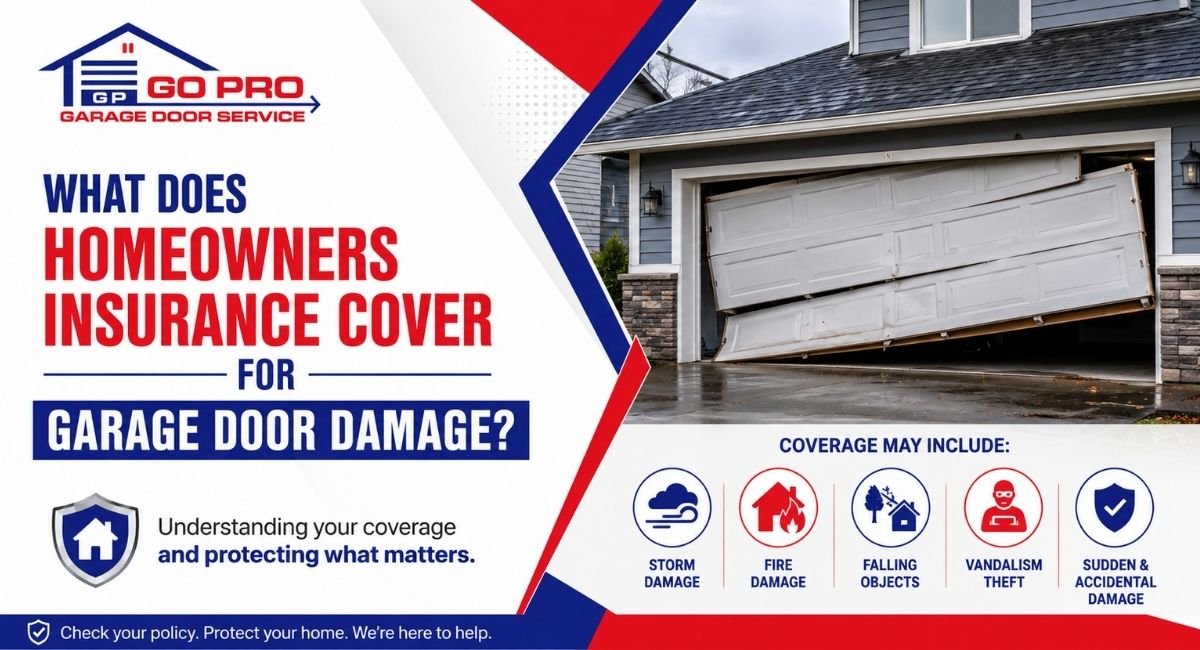
The simple answer is yes, but only when the damage results from a covered peril listed in your homeowners insurance policy.
Garage doors are generally considered part of your home’s structure. Because of that, they are usually covered under the dwelling coverage portion of a standard homeowners insurance policy.
Coverage depends on three important questions:
- What caused the damage?
- Does your policy cover that event?
- Does the repair cost exceed your deductible?
If all three conditions are met, your insurer will typically pay for repairs or replacement after subtracting your deductible.
Common Covered Perils for Garage Door Insurance Coverage
Most homeowners policies protect against sudden and accidental events rather than gradual wear.
Here are the most common covered perils.
Wind Damage
Strong wind is one of the leading causes of garage door insurance claims throughout Florida.
Wind may cause:
- Bent tracks
- Broken rollers
- Cracked panels
- Damaged reinforcement braces
- Detached garage doors
- Broken windows in garage doors
If a severe thunderstorm or windstorm damages your garage door, your policy will usually include wind damage coverage, provided wind is a covered peril in your policy.
Some coastal areas may have separate windstorm deductibles, so reviewing your policy is essential.
Hurricane Damage
Florida homeowners frequently ask about hurricane insurance claims involving garage doors.
Most standard homeowners insurance policies include hurricane wind damage, although the deductible is often much higher than your regular deductible.
For example:
| Damage | Usually Covered? |
| Hurricane winds bend garage door | Yes |
| Flying debris dents panels | Yes |
| Garage door blown off tracks | Usually |
| Rain enters after wind damages door | Often yes, if caused by covered storm damage |
The exact payout depends on your insurer, policy language, and deductible.
Falling Trees
Storms often bring falling limbs or entire trees.
If a healthy tree falls onto your garage because of wind, lightning, or storms, homeowners insurance usually covers:
- Garage door replacement
- Structural repairs
- Debris removal in many policies
However, if the tree was dead and neglected for years, coverage could become more complicated.
Fire Damage
Garage door damage caused by fire is generally covered.
Insurance usually pays for:
- Door replacement
- Frame repair
- Smoke damage
- Structural restoration
Fire remains one of the most commonly covered perils under homeowners insurance.
Lightning Damage
Lightning may damage:
- Garage door opener
- Electrical components
- Safety sensors
- Smart garage systems
If lightning causes the damage directly, homeowners insurance often covers both the opener and the garage door when applicable.
If your opener begins malfunctioning after a power surge, it may also be worth reviewing this guide on how to repair garage door opener .
Understanding the mechanical issue can help determine whether the damage is insurance related or simply a repair issue.
Vehicle Impact
If someone accidentally drives into your garage door, coverage depends on who caused the accident.
Possible situations include:
- You accidentally hit your own garage.
- A family member causes the damage.
- A visitor crashes into your garage.
Sometimes your homeowners insurance applies.
Other times the driver’s auto insurance becomes responsible.
Your insurance adjuster determines which policy pays first.
What Garage Door Damage Is Usually Not Covered?
Homeowners insurance does not cover every situation.
Many denied claims involve maintenance issues rather than sudden accidents.
Common policy exclusions include:
- Rust
- Corrosion
- Normal aging
- Wear and tear
- Poor maintenance
- Pest damage
- Manufacturing defects
- Gradual deterioration
For example, springs naturally weaken over thousands of opening cycles.
If a spring simply wears out after years of use, insurance normally will not cover replacement.
Instead, homeowners should budget for routine maintenance and repairs.
If you’re unsure whether aging components are reaching the end of their lifespan, this guide explains how long a garage door lasts and what signs indicate replacement may be necessary:
Does Insurance Cover Accidental Garage Door Damage?
Many homeowners are surprised that accidental damage is not always straightforward.
Coverage depends on how the accident happened.
Example 1
A delivery truck backs into your garage.
Usually covered through the driver’s vehicle insurance.
Example 2
A tree branch falls during a storm.
Usually covered under homeowners insurance.
Example 3
You accidentally back into your own garage.
Coverage depends on your homeowners policy and your automobile insurance.
Each insurance company evaluates these claims differently.
How Insurance Deductibles Affect Garage Door Claims
Many homeowners focus only on whether damage is covered.
The deductible is just as important.
An insurance deductible is the amount you pay before insurance contributes.
For example:
| Repair Cost | Deductible | Insurance Pays |
| $900 | $1,000 | $0 |
| $2,800 | $1,000 | $1,800 |
| $6,000 | $2,000 | $4,000 |
Florida homeowners often have separate hurricane deductibles that are significantly higher than standard deductibles.
Always compare the repair estimate with your deductible before filing a claim.
Sometimes paying directly for repairs is financially smarter than submitting a small claim.
Replacement Cost vs Actual Cash Value
Not every homeowners policy pays the same amount.
There are two common settlement methods.
Replacement Cost
This pays the amount needed to replace the damaged garage door with a similar new one, minus your deductible.
This option generally provides the highest level of protection.
Actual Cash Value
This considers depreciation.
If your garage door is fifteen years old, the insurer may reduce payment based on age and condition.
As a result, your out-of-pocket expense may be much higher.
Understanding which settlement method your policy uses helps you avoid unexpected costs after damage occurs.
When Garage Storm Damage Requires Immediate Repairs
After severe weather, some homeowners delay repairs because they are waiting for an insurance inspection.
That can actually make the situation worse.
For example:
- Bent tracks may cause the door to collapse.
- Broken panels can allow rainwater inside.
- Damaged springs create safety hazards.
- Misaligned rollers place additional strain on the opener.
If your garage door no longer opens safely or has visible structural damage, scheduling prompt service can help prevent further issues while you document the damage for your insurer.
For example, recognizing the early signs your garage door needs repair can help you address problems before they become larger insurance or safety concerns:.
Understanding the Garage Door Insurance Claim Process
When your garage door is damaged, acting quickly and staying organized can improve the chances of a smooth insurance claim. Most insurance companies follow a similar process, although specific requirements vary by policy and provider.
Step 1. Make Sure the Area Is Safe
Your first priority is safety.
If the garage door is hanging off its tracks, has broken springs, or is unstable, avoid operating it. Disconnect the automatic opener if necessary and keep children and pets away from the damaged area.
If the damage leaves your home exposed, take reasonable temporary measures to prevent additional loss. For example, you may board up broken sections or cover openings with a tarp if it is safe to do so. Many insurance policies require homeowners to prevent further damage after a covered event.
Step 2. Document the Damage
Good documentation is one of the most important parts of any insurance claim.
Take clear photos and videos from multiple angles. Include:
- The entire garage door
- Close-up images of dents, cracks, or broken panels
- Damaged tracks, rollers, and springs
- Any debris that caused the damage
- Damage to vehicles or belongings inside the garage
- Exterior photos showing the storm’s impact
If the damage resulted from a hurricane or severe storm, document other affected areas around your property as well.
Step 3. Review Your Insurance Policy
Before contacting your insurer, review your homeowners policy.
Look for information about:
- Covered perils
- Hurricane or windstorm deductibles
- Dwelling coverage limits
- Policy exclusions
- Replacement cost or actual cash value settlement
Understanding your policy helps set realistic expectations before the claims process begins.
Step 4. Contact Your Insurance Company
Report the damage as soon as possible.
Most insurers allow claims through:
- Mobile apps
- Online customer portals
- Customer service phone lines
- Local insurance agents
Be prepared to provide:
- Policy number
- Date of loss
- Cause of damage
- Photos
- Initial repair estimates if available
Waiting too long to report damage can complicate your claim.
Step 5. Meet With the Insurance Adjuster
Most significant claims involve an inspection by an insurance adjuster.
The adjuster evaluates:
- Cause of damage
- Extent of structural damage
- Whether the event is covered
- Repair versus replacement costs
- Existing wear or maintenance issues
Being present during the inspection allows you to answer questions and point out damage that might otherwise be overlooked.
Step 6. Obtain Professional Repair Estimates
Even if your insurer recommends a contractor, obtaining an estimate from a trusted garage door professional provides an independent assessment.
A detailed estimate should identify:
- Damaged components
- Labor costs
- Replacement parts
- Safety concerns
- Whether repairs are practical or full replacement is recommended
This documentation can support your claim if questions arise.
Repair or Replace? How Insurance Companies Decide
Not every damaged garage door requires complete replacement.
Insurance companies generally compare the repair cost with the replacement cost while considering safety and functionality.
Repairs are often appropriate when:
- One or two panels are damaged.
- Tracks can be straightened.
- Rollers or hinges need replacement.
- The opener remains functional.
- Structural integrity has not been compromised.
Replacement may be recommended when:
- Multiple panels are crushed.
- The frame is twisted.
- Tracks are severely bent.
- Wind damage weakens the entire door.
- Replacement parts are no longer available.
- Repair costs approach the price of a new door.
If replacement becomes necessary, understanding the garage door installation cost can help homeowners compare insurance estimates with current market pricing:
Florida Weather Creates Unique Insurance Challenges
Florida homeowners face weather conditions that are uncommon in many other states.
Strong thunderstorms, hurricanes, tropical storms, and tornadoes can all place enormous stress on residential garage doors.
A garage door is often one of the weakest openings in a home’s exterior envelope. When it fails during a hurricane, wind pressure can increase dramatically inside the structure.
Because of this risk, many insurers pay close attention to:
- Wind-resistant garage door construction
- Proper installation
- Building code compliance
- Existing maintenance issues
If your garage door was already deteriorating before the storm, the insurer may argue that some of the damage resulted from normal wear rather than the storm itself.
Routine maintenance helps reduce this risk.
A yearly garage door maintenance checklist can identify worn components before severe weather arrives.
Common Reasons Garage Door Insurance Claims Are Denied
A denied claim does not always mean the insurance company acted unfairly.
Many denials occur because the damage falls outside the policy’s terms.
Common reasons include:
Lack of Maintenance
If rusted tracks, broken springs, or neglected rollers contributed to the failure, the insurer may classify the damage as preventable.
Wear and Tear
Homeowners insurance is designed for sudden losses, not aging equipment.
A garage door that simply reaches the end of its service life is generally not covered.
Delayed Reporting
Waiting weeks or months before filing a claim makes it harder to prove the original cause of damage.
Insufficient Documentation
Missing photographs or incomplete descriptions may delay or weaken your claim.
Excluded Perils
Flood damage is one example.
Standard homeowners insurance typically does not cover flooding. Separate flood insurance may be required depending on your location.
Tips for Strengthening Your Insurance Claim
You cannot guarantee approval, but you can improve your chances by following a few best practices.
- Take photos before cleaning up debris.
- Keep receipts for temporary emergency repairs.
- Save damaged parts if possible.
- Maintain copies of all communication with your insurer.
- Request written repair estimates.
- Do not dispose of damaged components until your insurer approves it.
- Review your settlement carefully before accepting payment.
Being organized often leads to a smoother claim process.
Preventing Future Garage Door Damage
Insurance is valuable, but prevention is even better.
Regular maintenance can extend the life of your garage door while reducing the risk of expensive repairs.
Consider these preventive measures:
- Inspect weather seals every few months.
- Tighten loose hardware.
- Lubricate moving parts according to the manufacturer’s recommendations.
- Test the automatic reverse safety system.
- Replace worn rollers before they fail.
- Schedule professional tune-ups annually.
- Reinforce older garage doors if you live in hurricane-prone areas.
- Trim trees near the garage to reduce the risk of falling branches.
Simple maintenance often costs far less than emergency repairs.
When Professional Repairs Are the Better Choice
Garage door systems operate under significant spring tension. Attempting major repairs without the proper tools can lead to serious injury.
Professional technicians can safely diagnose issues involving:
- Broken torsion springs
- Bent tracks
- Damaged cables
- Off-track doors
- Misaligned rollers
- Opener failures
If storm damage causes the door to come off its tracks, professional garage door off-track repair should be completed before attempting to operate the door.
Similarly, damaged lifting cables should be addressed promptly through a qualified garage door cable repair service to restore safe operation.
Frequently Asked Questions
1. Does homeowners insurance cover garage door wind damage?
In most cases, yes. If wind is listed as a covered peril in your homeowners policy, damage caused by strong winds is generally covered after your deductible is applied.
2. Are hurricane-related garage door repairs covered?
Most Florida homeowners policies provide coverage for hurricane wind damage, although they often include a separate hurricane deductible that may be higher than your standard deductible.
3. Will insurance pay to replace my entire garage door?
It depends on the extent of the damage. If repairs cannot safely restore the door or replacement costs are justified, the insurer may approve a full replacement.
4. Does homeowners insurance cover broken garage door springs?
Not usually. Springs that fail because of age, corrosion, or normal wear are generally considered maintenance items rather than sudden accidental damage.
5. What should I do before the insurance adjuster arrives?
Take detailed photos, protect the property from further damage, keep damaged parts if possible, and gather any maintenance records or repair estimates.
6. Should I file a claim for minor garage door damage?
Compare the estimated repair cost with your deductible. If repairs cost less than or only slightly more than your deductible, paying out of pocket may be the more practical option.
7. Can I choose my own garage door contractor?
In many cases, yes. While your insurer may recommend preferred contractors, homeowners are often free to obtain estimates from qualified professionals of their choice.
Final Thoughts
Understanding garage door insurance coverage helps you respond confidently when unexpected damage occurs. While homeowners insurance often covers garage doors damaged by covered perils such as hurricanes, windstorms, fire, lightning, or falling trees, it generally does not pay for problems caused by aging, poor maintenance, or normal wear.
Knowing your policy, documenting damage thoroughly, and acting quickly after a storm can make the claims process much easier. Just as important, routine maintenance and timely repairs can reduce the likelihood of costly failures and help your garage door withstand Florida’s demanding weather conditions.
If your garage door has been damaged by a storm or another covered event, a professional inspection can determine whether repair or replacement is the safest solution. Go Pro Garage Door Services provides expert garage door repair, maintenance, and installation services to help homeowners restore the safety, security, and performance of their garage doors. Whether you need emergency repairs, a complete replacement, or guidance after an insurance claim, experienced technicians can provide the support you need.