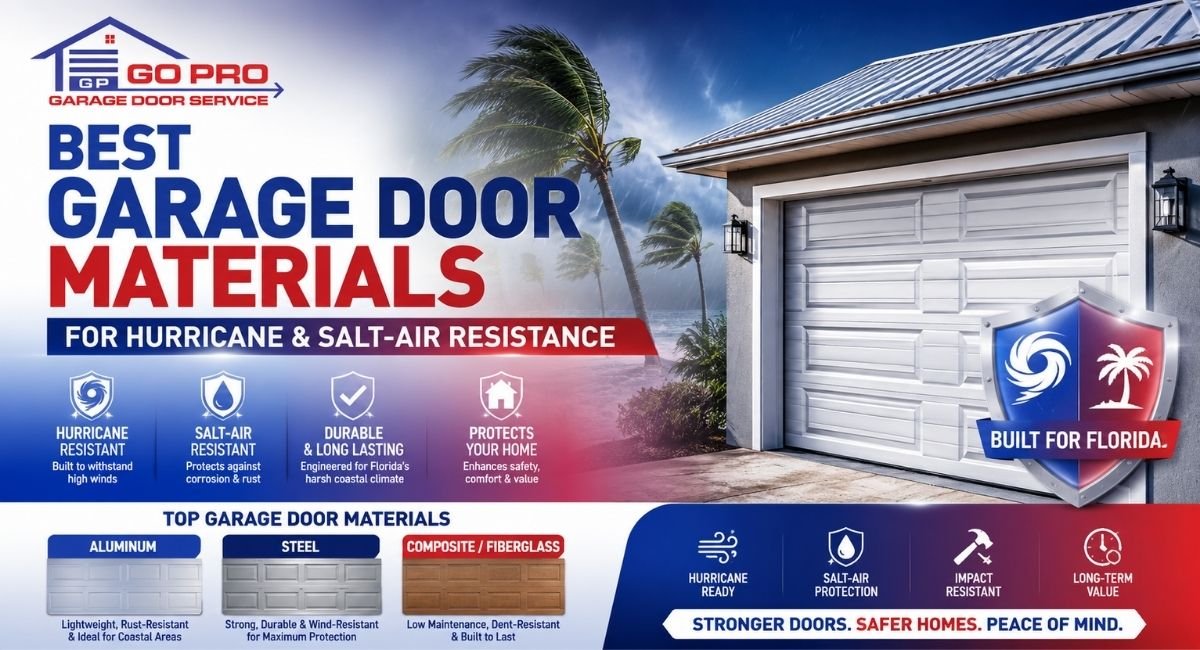
Florida homeowners know that a garage door does much more than protect vehicles. It is one of the largest openings in a home and often one of the first areas affected during hurricanes. Strong wind pressure, flying debris, heavy rain, and constant exposure to salty coastal air can shorten the life of a garage door if the wrong material is chosen.
A damaged garage door is more than an inconvenience. During a hurricane, a failed garage door can allow wind to enter the garage, increasing internal pressure that may damage walls, roofing systems, and even the structural integrity of the home. Along the coast, salt air creates another challenge by accelerating rust and corrosion on metal components.
That is why selecting the right hurricane resistant garage door materials is an important investment for homeowners across Orlando, Central Florida, and coastal communities throughout the state. While every material has advantages, not every garage door performs equally under hurricane conditions or long-term salt exposure.
This guide compares today’s most reliable materials, explains the certifications that matter, and helps you choose the best option based on your home’s location, budget, maintenance expectations, and storm protection needs.
Why Garage Door Material Matters During Hurricane Season
Many homeowners focus on windows and roofing before storm season, but the garage door deserves the same attention. Because it covers such a large opening, failure can create serious pressure differences inside the home.
When hurricane-force winds enter through a damaged garage door, they may lift the roof or weaken surrounding walls. This is why Florida building regulations require many homes to use reinforced garage doors that meet strict wind load requirements.
Besides storm protection, material selection also determines how well the door resists:
- Salt corrosion
- Moisture damage
- UV exposure
- Impact from debris
- Daily wear and tear
- Long-term maintenance costs
A durable garage door can last decades when properly selected and maintained.
If you’re comparing replacement options, it’s also helpful to estimate your garage door installation cost before choosing premium materials.
What Makes a Garage Door Hurricane Resistant?
Not every strong-looking garage door qualifies as hurricane rated.
True impact-rated garage doors are engineered and tested to withstand extreme wind pressure and flying debris. Manufacturers reinforce these doors with heavier gauge materials, stronger tracks, additional bracing, and upgraded hardware.
Several testing standards determine whether a door is suitable for hurricane-prone regions.
Florida Building Code Requirements
The Florida Building Code establishes wind load requirements based on the home’s location and exposure category.
Homes closer to the coast generally require stronger wind ratings than homes located farther inland.
Building officials review several factors, including:
- Design wind speed
- Exposure category
- Building height
- Garage door size
- Structural attachment methods
Meeting code requirements is essential for both safety and insurance compliance.
Miami-Dade NOA Approval
The Miami-Dade NOA (Notice of Acceptance) is one of the most respected certifications for hurricane-resistant building products.
Garage doors with Miami-Dade approval undergo extensive laboratory testing for:
- Wind pressure
- Water infiltration
- Structural strength
- Impact resistance
Even homeowners outside South Florida often choose products carrying this certification because of its strict performance standards.
ASTM Testing Standards
Organizations such as ASTM International establish testing procedures for construction materials.
Garage doors may be tested for:
- Wind resistance
- Impact performance
- Material durability
- Corrosion resistance
ASTM standards help manufacturers demonstrate consistent product quality.
Key Features to Look for in Weather Resistant Doors
Material alone does not determine performance.
The best weather resistant doors combine several protective features.
Reinforced Internal Bracing
Steel reinforcement increases structural strength during high winds.
Heavy-Duty Tracks
Stronger tracks help keep the door aligned during pressure changes.
Corrosion Resistant Hardware
Hinges, springs, rollers, brackets, and fasteners should resist rust, especially near the coast.
Marine-Grade Coating
A quality marine-grade coating protects painted metal surfaces from moisture and salt exposure.
High Wind Load Rating
Always compare the manufacturer’s certified wind rating rather than relying on advertising claims.
Durable Weather Seals
Bottom seals and perimeter weather stripping reduce water intrusion while improving insulation.
Routine maintenance also helps extend performance. Following a regular garage door maintenance checklist helps identify rust, worn seals, loose hardware, and other issues before they become expensive repairs.
Comparing the Best Hurricane Resistant Garage Door Materials
Each material offers different strengths. The right choice depends on your location, maintenance expectations, and budget.
1. Galvanized Steel Garage Doors
Galvanized steel remains the most popular option for Florida homeowners.
The zinc coating protects the steel beneath from rust while providing excellent structural strength.
Advantages
- Outstanding wind resistance
- Excellent impact protection
- Long service life
- Wide selection of styles
- Compatible with insulation
- Available with impact-rated reinforcement
Modern galvanized steel doors often include factory-applied marine-grade finishes that improve corrosion resistance.
Considerations
Steel can eventually develop rust if protective coatings become scratched or damaged. Regular inspection helps prevent corrosion from spreading.
For homes near the ocean, choosing additional corrosion-resistant finishes provides better long-term protection.
Best For
- Hurricane-prone areas
- Most Florida homes
- High wind zones
- Long-term durability
2. Aluminum Garage Doors
Aluminum naturally resists rust, making it attractive for coastal environments.
Unlike steel, aluminum does not oxidize into structural rust. Instead, it forms a protective oxide layer.
Advantages
- Excellent corrosion resistance
- Lightweight operation
- Low maintenance
- Modern appearance
- Suitable for humid climates
Many corrosion resistant garage doors are manufactured from reinforced aluminum frames.
Considerations
Standard aluminum dents more easily than reinforced steel.
If impact resistance is your priority, choose hurricane-rated aluminum doors specifically engineered for high wind regions.
Best For
- Coastal homes
- Modern architecture
- Low maintenance
- Salt-air environments
3. Fiberglass Garage Doors
Fiberglass performs surprisingly well in humid climates.
Because fiberglass contains no exposed steel, it does not rust like traditional metal doors.
Advantages
- No rust
- Moisture resistant
- Lightweight
- Can imitate wood finishes
- Good resistance to salt air
Fiberglass also resists insect damage better than natural wood.
Considerations
Extended UV exposure may eventually fade lower-quality finishes.
Extreme impacts may crack fiberglass panels more easily than reinforced steel.
Best For
- Moderate hurricane zones
- Coastal humidity
- Decorative appearance
4. Composite Garage Doors
Composite materials combine wood fibers, polymers, fiberglass, or engineered materials to create highly durable panels.
These composite materials continue gaining popularity because they combine attractive finishes with lower maintenance.
Advantages
- Excellent moisture resistance
- Reduced maintenance
- Strong insulation
- Wood appearance without frequent refinishing
- Better resistance to rot
Premium composite doors often include reinforced steel cores for additional hurricane protection.
Considerations
High-quality composite doors typically cost more than standard steel doors.
However, reduced maintenance often offsets the higher initial investment over time.
Best For
- Luxury homes
- Coastal climates
- Homeowners wanting wood appearance without heavy upkeep
Material Comparison Table
| Material | Wind Resistance | Salt Air Resistance | Maintenance | Expected Lifespan |
| Galvanized Steel | Excellent | Very Good with protective coating | Low | 20 to 30 years |
| Aluminum | Very Good | Excellent | Very Low | 20 to 25 years |
| Fiberglass | Good | Excellent | Low | 15 to 25 years |
| Composite | Excellent | Excellent | Low | 25 to 30 years |
Which Material Performs Best Against Salt Corrosion?
Living near Florida’s coastline means your garage door faces constant exposure to airborne salt particles. Even if you are several miles inland, ocean breezes can gradually deposit salt on exterior surfaces.
Salt attracts moisture and accelerates corrosion, especially on untreated steel. This is why homeowners in coastal communities should pay close attention to protective finishes rather than focusing only on the door material itself.
In many cases, a properly coated galvanized steel door lasts longer than a lower-quality aluminum door because modern protective systems combine zinc coatings, primer layers, baked-on paint finishes, and specialized marine-grade coatings.
Regular washing also makes a noticeable difference. Simply rinsing the garage door every few weeks helps remove salt buildup before it begins affecting the finish.
If corrosion starts affecting tracks or rollers, delaying repairs can place additional stress on the opener system. Addressing problems early is often easier than waiting until multiple components wear out. When unusual noises or uneven movement appear, a professional garage door tune-up can identify developing issues before they become major repairs.
Which Garage Door Material Is Best for Different Florida Homes?
The best garage door material depends on where your home is located, how much maintenance you are willing to do, and the level of storm protection you need. A homeowner living a few miles from the Atlantic Ocean has different priorities than someone living farther inland in Orlando.
Instead of choosing based only on price or appearance, compare the long-term performance of each material.
For Homes Near the Coast
If your home is close to the ocean, salt exposure should be one of your biggest concerns. Salt particles settle on garage doors every day, even when they are not visible. Over time, they speed up corrosion and can weaken metal components if the protective finish is damaged.
For coastal properties, the best choices include:
- Galvanized steel with a premium marine-grade coating
- Reinforced aluminum with an impact-rated design
- Composite garage doors with steel reinforcement
These materials provide an excellent balance of durability, corrosion resistance, and structural strength.
For Orlando and Central Florida Homes
Although Orlando is inland, hurricanes can still produce damaging winds and flying debris. Choosing a garage door that meets local wind load requirements remains important.
Many homeowners benefit from:
- Impact-rated galvanized steel
- Insulated composite garage doors
- Reinforced steel carriage-style doors
These options improve storm protection while helping regulate garage temperatures during Florida’s hot summers.
If your current door frequently sticks, shakes, or operates unevenly, reviewing these garage door repair signs can help determine whether repairs are still practical or if replacement makes better financial sense.
Understanding Wind Ratings Before You Buy
One of the most common mistakes homeowners make is assuming every reinforced garage door offers the same level of protection.
In reality, wind ratings vary considerably.
Manufacturers test garage doors under controlled laboratory conditions to determine the amount of positive and negative wind pressure they can safely withstand.
Factors affecting wind performance include:
- Door width
- Panel thickness
- Reinforcement design
- Track system
- Mounting hardware
- Installation quality
Even the strongest door can fail if it is installed incorrectly. Proper anchoring and reinforcement are just as important as the material itself.
Always ask your installer for documentation showing compliance with applicable wind load requirements and product approvals.
The Role of Insulation in Hurricane Garage Doors
Many homeowners focus only on storm protection and overlook insulation.
An insulated garage door offers several advantages beyond energy savings.
It can help:
- Reduce heat entering the garage
- Improve indoor comfort
- Lower outside noise
- Increase panel rigidity
- Improve overall door durability
Most premium hurricane-rated garage doors include polyurethane or polystyrene insulation sandwiched between steel panels.
The additional structural support may also improve resistance during strong wind events.
Common Mistakes When Choosing Hurricane Resistant Garage Door Materials
A garage door is a long-term investment. Choosing the wrong product often results in higher maintenance costs and premature replacement.
Here are some of the most common buying mistakes.
Choosing Price Over Performance
An inexpensive garage door may look attractive initially, but lower-quality materials often require more repairs over time.
Pay attention to:
- Wind certification
- Corrosion protection
- Warranty coverage
- Hardware quality
These factors usually provide greater long-term value than the initial purchase price alone.
Ignoring Salt-Air Protection
Some homeowners assume galvanized steel never rusts.
While galvanization significantly improves corrosion resistance, damaged paint or scratched coatings can expose underlying metal.
Regular cleaning and occasional touch-up painting extend the life of steel doors.
Forgetting About Hardware
The door panels are only part of the system.
Springs, hinges, rollers, tracks, brackets, and fasteners should also be corrosion resistant.
Replacing only the door while leaving worn hardware behind can reduce overall performance.
Hiring an Inexperienced Installer
A high-quality impact-rated garage door performs best when installed according to manufacturer specifications.
Improper installation may affect:
- Wind resistance
- Door alignment
- Seal performance
- Warranty coverage
Professional installation is always recommended for hurricane-rated products.
How to Maintain Coastal Garage Doors
Even the best coastal garage doors require routine maintenance.
Fortunately, most maintenance tasks are simple.
Wash the Door Regularly
Rinse the exterior every few weeks to remove accumulated salt deposits.
Avoid harsh chemicals that may damage protective coatings.
Inspect Protective Finishes
Check painted surfaces for scratches, chips, or exposed metal.
Repairing minor damage early helps prevent corrosion.
Lubricate Moving Components
Proper lubrication reduces wear on hinges, rollers, bearings, and springs.
Using the correct lubricant also helps protect metal parts from moisture.
For step-by-step guidance, read this detailed guide on garage door lubrication.
Check Weather Seals
Replace cracked or flattened weather stripping before heavy rain arrives.
Good seals improve both weather protection and energy efficiency.
Schedule Professional Inspections
A yearly inspection helps identify developing issues before they affect door performance during hurricane season.
Is Wood a Good Choice for Hurricane-Prone Areas?
Wood garage doors remain popular because of their timeless appearance.
However, they require significantly more maintenance than steel, aluminum, or composite alternatives.
Moisture causes natural wood to:
- Expand
- Contract
- Crack
- Warp
- Require regular refinishing
For most Florida homeowners, engineered composite materials provide a similar appearance with much lower maintenance.
Unless maintaining authentic wood is a top priority, composite doors generally offer better long-term value in humid coastal environments.
Cost Versus Long-Term Value
Choosing the least expensive garage door rarely produces the lowest lifetime cost.
Premium materials often last much longer while requiring fewer repairs.
Long-Term Value Comparison
| Material | Initial Cost | Maintenance Cost | Hurricane Performance | Coastal Performance | Overall Value |
| Galvanized Steel | Moderate | Low | Excellent | Very Good | Excellent |
| Aluminum | Moderate to High | Very Low | Very Good | Excellent | Excellent |
| Fiberglass | Moderate | Low | Good | Excellent | Very Good |
| Composite | High | Low | Excellent | Excellent | Excellent |
When evaluating overall value, consider:
- Expected lifespan
- Repair frequency
- Energy efficiency
- Insurance benefits
- Storm protection
- Home resale value
Many buyers view an upgraded impact-rated garage door as a valuable feature because it improves both safety and curb appeal.
You can also compare the top benefits of installing a new garage door before making a replacement decision.
When Is It Time to Replace Instead of Repair?
Repairs make sense when damage is limited.
Replacement becomes the better investment if your garage door has:
- Extensive rust
- Structural bending
- Multiple cracked panels
- Significant storm damage
- Repeated track failures
- An outdated wind rating
- Severe corrosion on reinforcement components
If your existing door is over 20 years old, newer models often provide substantially better wind resistance and corrosion protection.
For homeowners planning a replacement, professional garage door installation ensures the new system is properly reinforced and meets applicable building requirements.
Common Questions About Hurricane Resistant Garage Door Materials
1. What is the best hurricane resistant garage door material?
Galvanized steel with a marine-grade protective coating remains one of the best overall choices for Florida homeowners. It offers excellent wind resistance, strong impact protection, and long service life. Composite doors with reinforced steel cores are also excellent options.
2. Are impact-rated garage doors worth the investment?
Yes. Impact-rated garage doors are specifically engineered to withstand hurricane-force winds and flying debris. They can improve home protection, reduce storm damage risks, and may even qualify for insurance discounts in some areas.
3. How do I know if a garage door meets Florida requirements?
Check whether the door complies with the Florida Building Code and look for certifications such as Miami-Dade NOA approval or other recognized wind load testing documentation provided by the manufacturer.
4. Can salt air damage aluminum garage doors?
Aluminum naturally resists rust better than standard steel, making it a good choice for coastal homes. However, hardware and fasteners should also be corrosion resistant to maximize durability.
5. How often should coastal garage doors be cleaned?
Most experts recommend rinsing the garage door every few weeks to remove salt deposits. Homes located directly on the coastline may benefit from more frequent cleaning.
6. Do insulated garage doors improve hurricane performance?
Insulation mainly improves energy efficiency and comfort, but insulated sandwich panels can also increase overall door rigidity and structural strength.
7. How long does a hurricane-rated garage door typically last?
With proper maintenance, a quality hurricane-rated garage door can last 20 to 30 years or more, depending on the material, local climate, and level of salt exposure.
Final Words
Choosing the right hurricane resistant garage door materials is about more than preparing for the next storm. It is an investment in your home’s safety, durability, and long-term value.
For most Florida homeowners, galvanized steel, reinforced aluminum, and composite garage doors offer the best balance of wind resistance, salt corrosion protection, and low maintenance. The ideal choice depends on your home’s location, your budget, and the level of exposure to coastal conditions.
When comparing products, look beyond appearance. Verify compliance with the Florida Building Code, review Miami-Dade NOA approvals when applicable, and choose doors tested to recognized ASTM standards. A properly selected and professionally installed garage door can provide dependable protection for many years.
If you are considering a replacement or upgrading to an impact-rated system, Go Pro Garage Door Services can help you select a garage door designed for Florida’s demanding climate. From expert installation to preventive maintenance and repairs, our team provides dependable solutions that improve safety, performance, and curb appeal.